Vitality, made in Australia.
Melanocortin receptor research peptides including PT-141, MT-1 and MT-2.
Four compounds acting on two different systems. Three are melanocortin peptides from the same family, with different receptor preferences and three very different outcomes: one became a registered medicine in Australia's own backyard, one has no approval anywhere and well-documented safety concerns, and one is approved in the United States. The fourth, kisspeptin, sits at the top of the reproductive hormone axis and has the cleanest evidence in the category.
One hormone, three outcomes
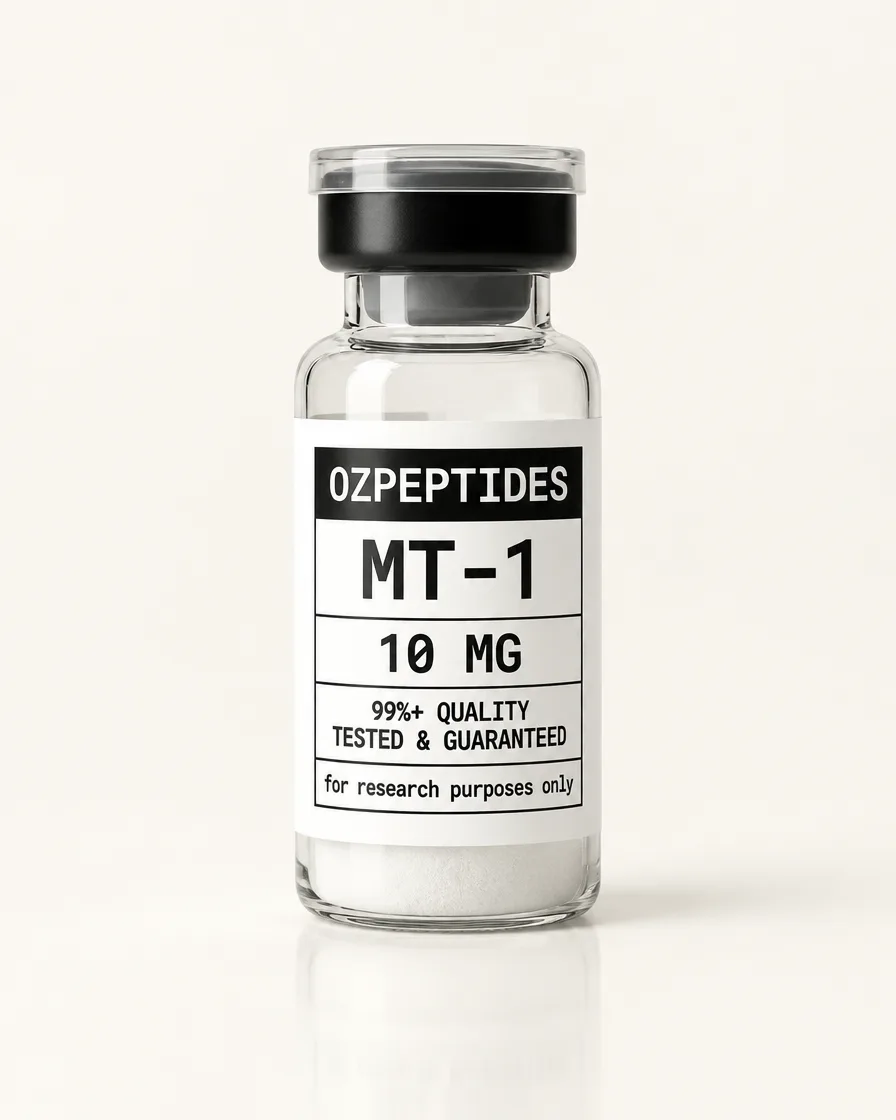
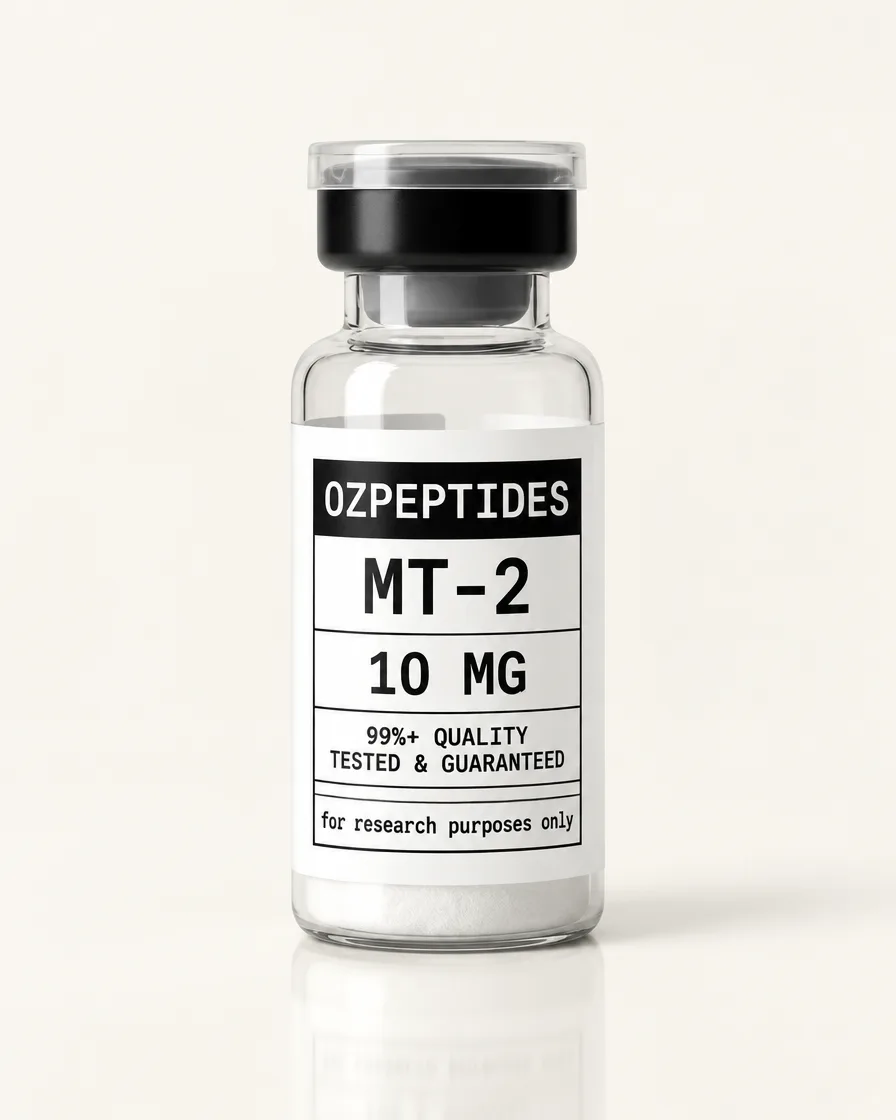
Alpha-MSH is a 13-residue hormone cleared within minutes, and MT-1, MT-2 and PT-141 all descend from attempts to make it stable enough to study. MT-1 stays linear with two substitutions, keeping its shape close to the hormone and its receptor preference with MC1R, the pigmentation receptor. MT-2 is shortened and cyclised, which raises potency and costs selectivity — the rigid shape fits MC3R and MC4R as well.
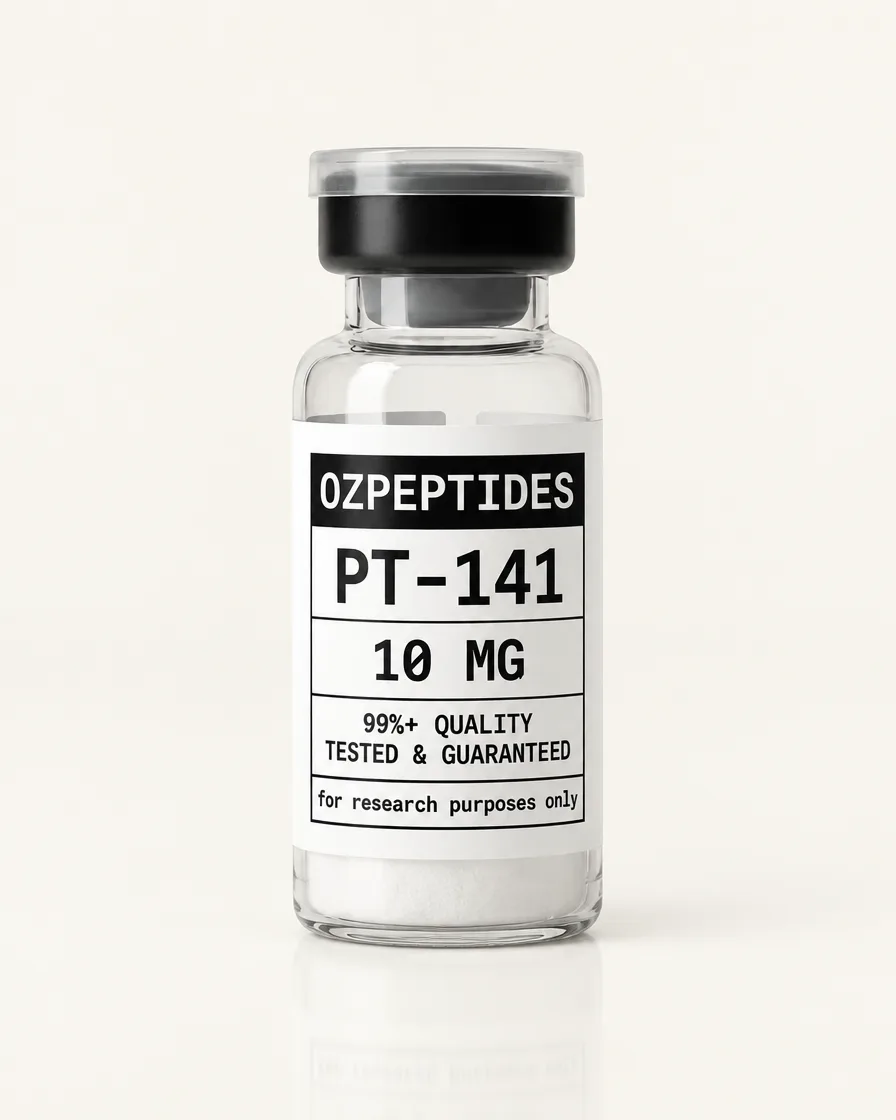
That promiscuity is why PT-141 exists. Researchers observing arousal effects in MT-2 research that had nothing to do with pigment traced them to an MC4R-active metabolite, developed separately as bremelanotide.
MT-1 became afamelanotide, developed by Clinuvel Pharmaceuticals in Melbourne and registered in several markets for erythropoietic protoporphyria. MT-2 never entered formal development. PT-141 is approved in the United States as Vyleesi. One family, three outcomes, three bodies of evidence.
The safety concerns
Injectable tanning products containing melanotan peptides carry two distinct concerns: the products themselves are unapproved and unassessed, and changes to existing skin lesions can go unnoticed in people using a compound that alters pigmentation.
That second concern is the specific one: altered pigmentation can complicate the routine visual monitoring by which melanoma is caught early. Neither MT-1 nor MT-2 is registered in Australia as a research product, and afamelanotide being registered elsewhere does not change that — the registered product is a controlled-release implant for a diagnosed rare condition, administered by a clinician.
Kisspeptin is a different proposition entirely
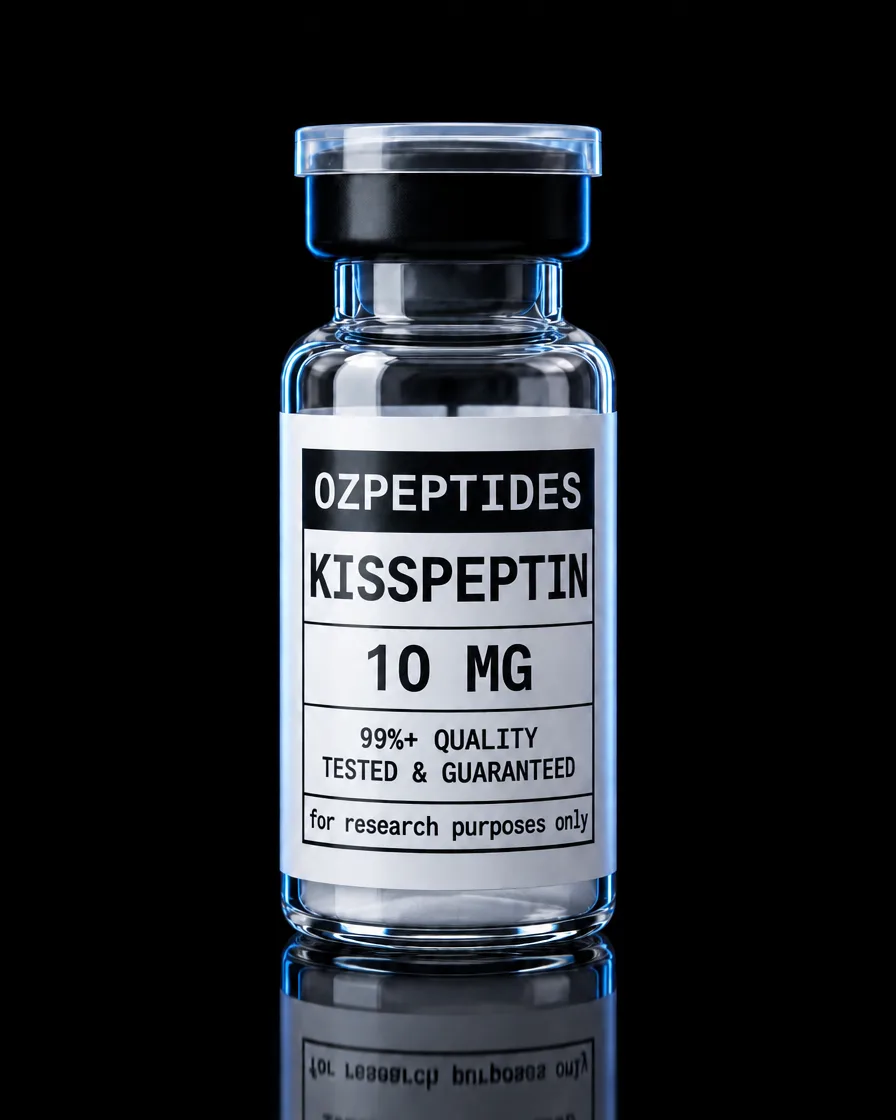
Kisspeptin acts on KISS1R, formerly GPR54, on hypothalamic neurons, stimulating GnRH release. That places it at the top of the reproductive hormone axis — above GnRH, which drives LH and FSH, which drive gonadal steroid production. It is the switch rather than one of the downstream levers.
Its evidence is unusually clean for this catalogue because it comes from human genetics rather than administration studies: loss-of-function mutations in the receptor cause failure to enter puberty, reported independently by two groups in 2003. Necessity established by what happens when something does not work is a stronger kind of evidence than an effect observed after administration.
The name comes from KISS1, the gene, identified as a metastasis suppressor and named in reference to Hershey Kisses at the Pennsylvania laboratory where the work was done.
Central, not vascular
PT-141 is often compared to PDE5 inhibitors and the comparison misleads. PDE5 inhibitors act on vascular smooth muscle and blood flow; PT-141 acts centrally, through melanocortin receptors in the hypothalamus and related structures. Two different mechanisms and two different classes of compound.
That difference also explains the reported effect profile — nausea and flushing prominent among them — which follows from central melanocortin activity rather than from anything vascular. Kisspeptin is likewise central, acting on hypothalamic neurons rather than at the gonad.
Regulatory status and sport
Nothing in this category is registered in Australia. PT-141 is approved in the United States as bremelanotide, and MT-1 as afamelanotide in several markets, but approvals do not transfer and the registered products are specific formulations rather than research vials.
For athletes: MT-2 and kisspeptin have no approval anywhere and fall under the WADA S0 catch-all, prohibited at all times. Kisspeptin's position above the hypothalamic-pituitary-gonadal axis invites particular scrutiny, since that axis governs endogenous steroid production. PT-141 is not currently named on the Prohibited List, but the list is revised annually and should be checked directly.
What to check before buying
MT-1, MT-2 and PT-141 are routinely confused with one another in the grey market, and that matters more than it sounds: the three have different receptor profiles, so a mislabelled vial produces results about a different compound rather than wrong results. Mass spectrometry resolves which is present; an HPLC purity figure can read 99% on any of them.
MT-2 is among the most counterfeited peptides sold online, and its cyclisation is a synthesis step a cheap process can skip — producing a linear peptide of similar mass and different behaviour. Kisspeptin has a variant question instead: kisspeptin-54, -14, -13 and -10 share a C-terminal region but differ substantially in mass and clearance.
We make all four in Blacktown, NSW, at ≥99% HPLC purity with 0 ppm heavy metals, with identity confirmed per batch.
Frequently asked
Is PT-141 the same as bremelanotide?
Yes. Bremelanotide is approved in the United States as Vyleesi; research-grade PT-141 is the same molecule but not that product.
What are the safety concerns with melanotan peptides?
Injectable tanning products containing them are unapproved and unassessed, and changes to skin lesions can go unnoticed in people using a compound that alters pigmentation.
Why is kisspeptin's evidence considered strong?
Because it comes from human genetics: loss-of-function receptor mutations cause failure to enter puberty, reported independently in 2003.
Does PT-141 work like a PDE5 inhibitor?
No. PDE5 inhibitors act on vascular smooth muscle; PT-141 acts centrally through melanocortin receptors, chiefly MC4R.
Vitality
Melanocortin research peptides.
Four compounds acting on two different systems. Three are melanocortin peptides from the same family, with different receptor preferences and three very different outcomes: one became a registered medicine in Australia's own backyard, one has no approval anywhere and well-documented safety concerns, and one is approved in the United States. The fourth, kisspeptin, sits at the top of the reproductive hormone axis and has the cleanest evidence in the category.
One hormone, three outcomes
Alpha-MSH is a 13-residue hormone cleared within minutes, and MT-1, MT-2 and PT-141 all descend from attempts to make it stable enough to study. MT-1 stays linear with two substitutions, keeping its shape close to the hormone and its receptor preference with MC1R, the pigmentation receptor. MT-2 is shortened and cyclised, which raises potency and costs selectivity — the rigid shape fits MC3R and MC4R as well.
That promiscuity is why PT-141 exists. Researchers observing arousal effects in MT-2 research that had nothing to do with pigment traced them to an MC4R-active metabolite, developed separately as bremelanotide.
MT-1 became afamelanotide, developed by Clinuvel Pharmaceuticals in Melbourne and registered in several markets for erythropoietic protoporphyria. MT-2 never entered formal development. PT-141 is approved in the United States as Vyleesi. One family, three outcomes, three bodies of evidence.
The safety concerns
Injectable tanning products containing melanotan peptides carry two distinct concerns: the products themselves are unapproved and unassessed, and changes to existing skin lesions can go unnoticed in people using a compound that alters pigmentation.
That second concern is the specific one: altered pigmentation can complicate the routine visual monitoring by which melanoma is caught early. Neither MT-1 nor MT-2 is registered in Australia as a research product, and afamelanotide being registered elsewhere does not change that — the registered product is a controlled-release implant for a diagnosed rare condition, administered by a clinician.
Kisspeptin is a different proposition entirely
Kisspeptin acts on KISS1R, formerly GPR54, on hypothalamic neurons, stimulating GnRH release. That places it at the top of the reproductive hormone axis — above GnRH, which drives LH and FSH, which drive gonadal steroid production. It is the switch rather than one of the downstream levers.
Its evidence is unusually clean for this catalogue because it comes from human genetics rather than administration studies: loss-of-function mutations in the receptor cause failure to enter puberty, reported independently by two groups in 2003. Necessity established by what happens when something does not work is a stronger kind of evidence than an effect observed after administration.
The name comes from KISS1, the gene, identified as a metastasis suppressor and named in reference to Hershey Kisses at the Pennsylvania laboratory where the work was done.
Central, not vascular
PT-141 is often compared to PDE5 inhibitors and the comparison misleads. PDE5 inhibitors act on vascular smooth muscle and blood flow; PT-141 acts centrally, through melanocortin receptors in the hypothalamus and related structures. Two different mechanisms and two different classes of compound.
That difference also explains the reported effect profile — nausea and flushing prominent among them — which follows from central melanocortin activity rather than from anything vascular. Kisspeptin is likewise central, acting on hypothalamic neurons rather than at the gonad.
Regulatory status and sport
Nothing in this category is registered in Australia. PT-141 is approved in the United States as bremelanotide, and MT-1 as afamelanotide in several markets, but approvals do not transfer and the registered products are specific formulations rather than research vials.
For athletes: MT-2 and kisspeptin have no approval anywhere and fall under the WADA S0 catch-all, prohibited at all times. Kisspeptin's position above the hypothalamic-pituitary-gonadal axis invites particular scrutiny, since that axis governs endogenous steroid production. PT-141 is not currently named on the Prohibited List, but the list is revised annually and should be checked directly.
What to check before buying
MT-1, MT-2 and PT-141 are routinely confused with one another in the grey market, and that matters more than it sounds: the three have different receptor profiles, so a mislabelled vial produces results about a different compound rather than wrong results. Mass spectrometry resolves which is present; an HPLC purity figure can read 99% on any of them.
MT-2 is among the most counterfeited peptides sold online, and its cyclisation is a synthesis step a cheap process can skip — producing a linear peptide of similar mass and different behaviour. Kisspeptin has a variant question instead: kisspeptin-54, -14, -13 and -10 share a C-terminal region but differ substantially in mass and clearance.
We make all four in Blacktown, NSW, at ≥99% HPLC purity with 0 ppm heavy metals, with identity confirmed per batch.
Frequently asked
Is PT-141 the same as bremelanotide?
Yes. Bremelanotide is approved in the United States as Vyleesi; research-grade PT-141 is the same molecule but not that product.
What are the safety concerns with melanotan peptides?
Injectable tanning products containing them are unapproved and unassessed, and changes to skin lesions can go unnoticed in people using a compound that alters pigmentation.
Why is kisspeptin's evidence considered strong?
Because it comes from human genetics: loss-of-function receptor mutations cause failure to enter puberty, reported independently in 2003.
Does PT-141 work like a PDE5 inhibitor?
No. PDE5 inhibitors act on vascular smooth muscle; PT-141 acts centrally through melanocortin receptors, chiefly MC4R.