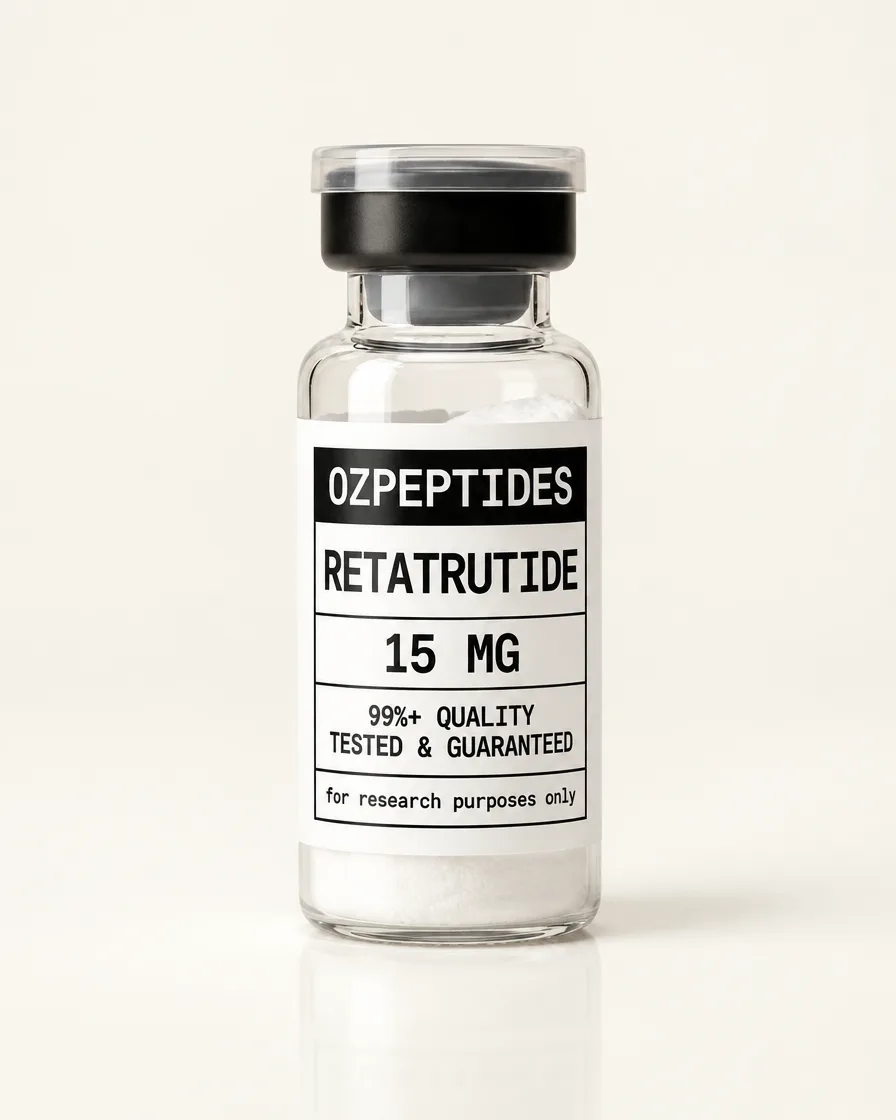
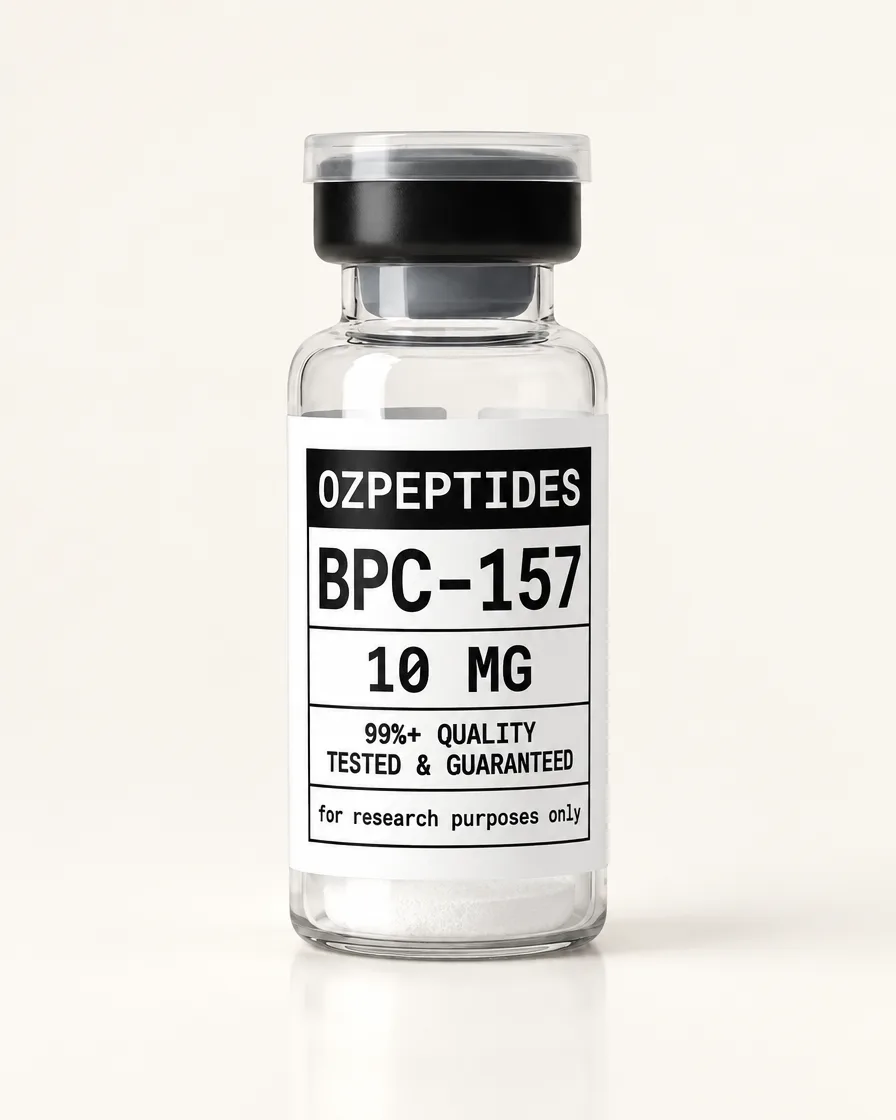
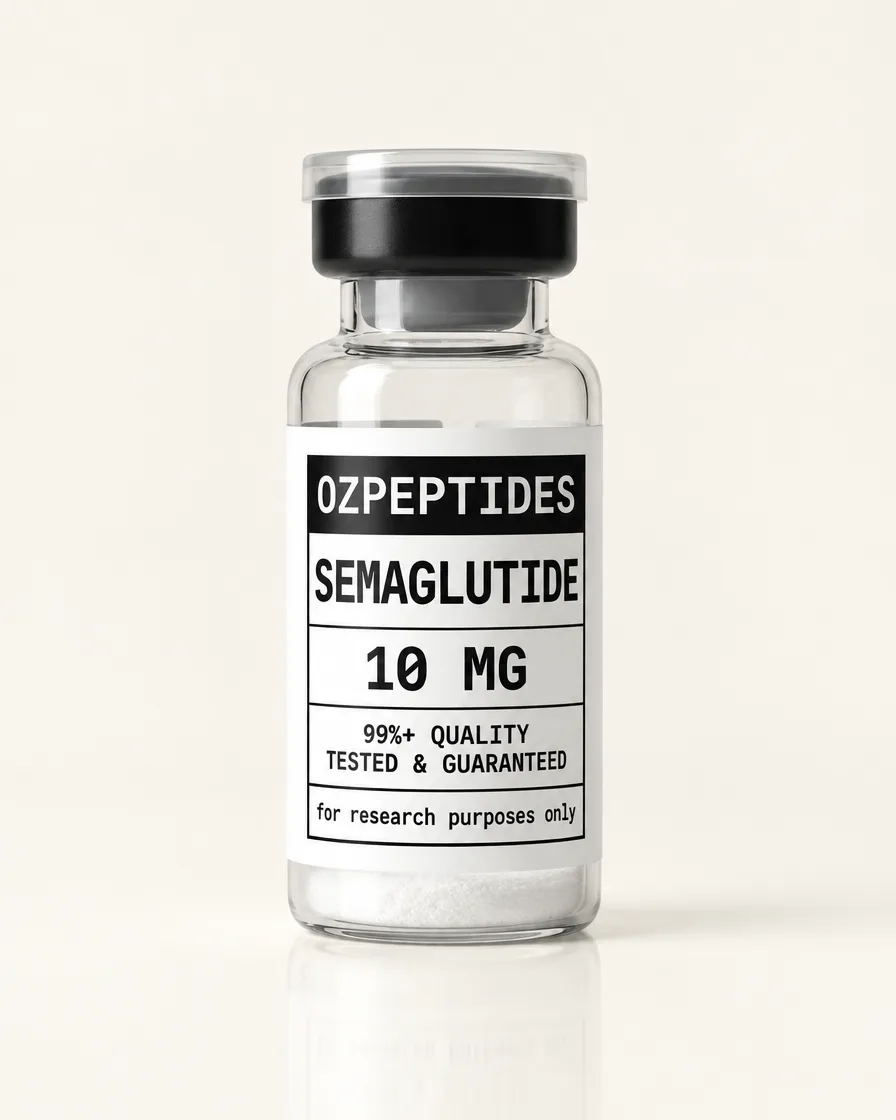
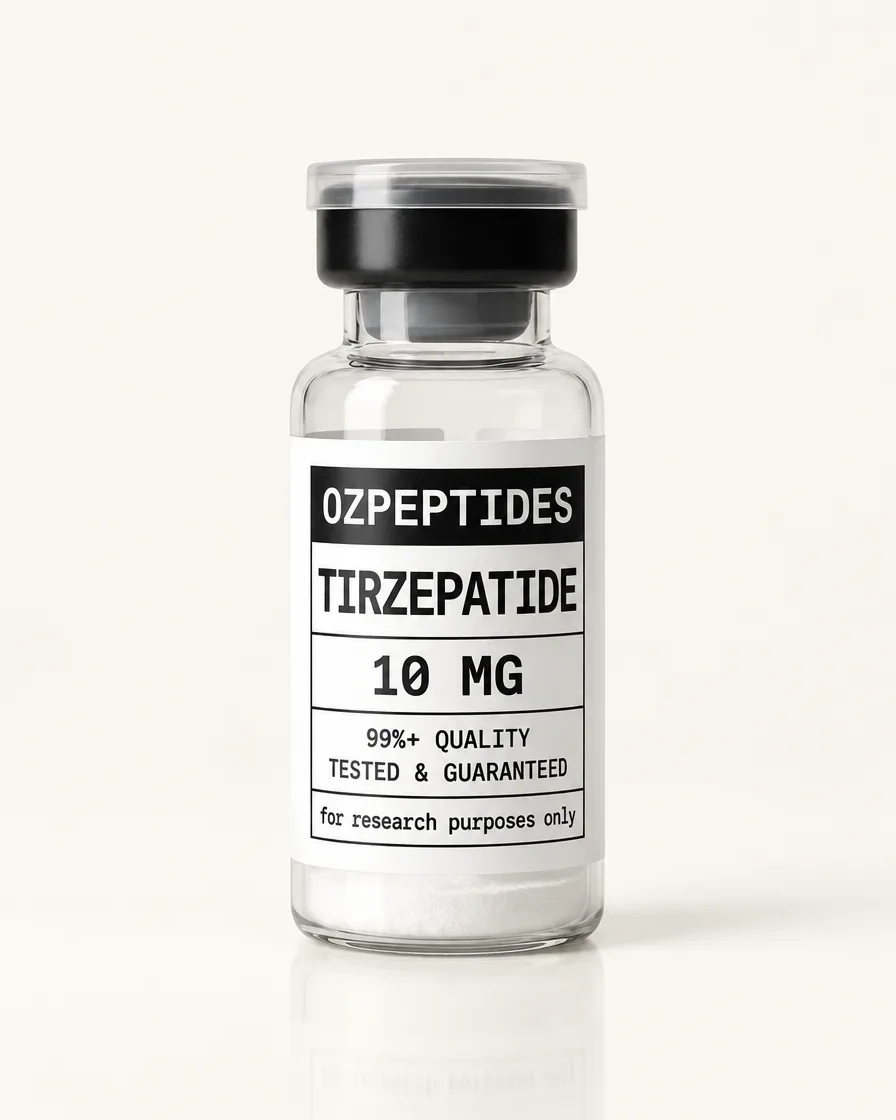
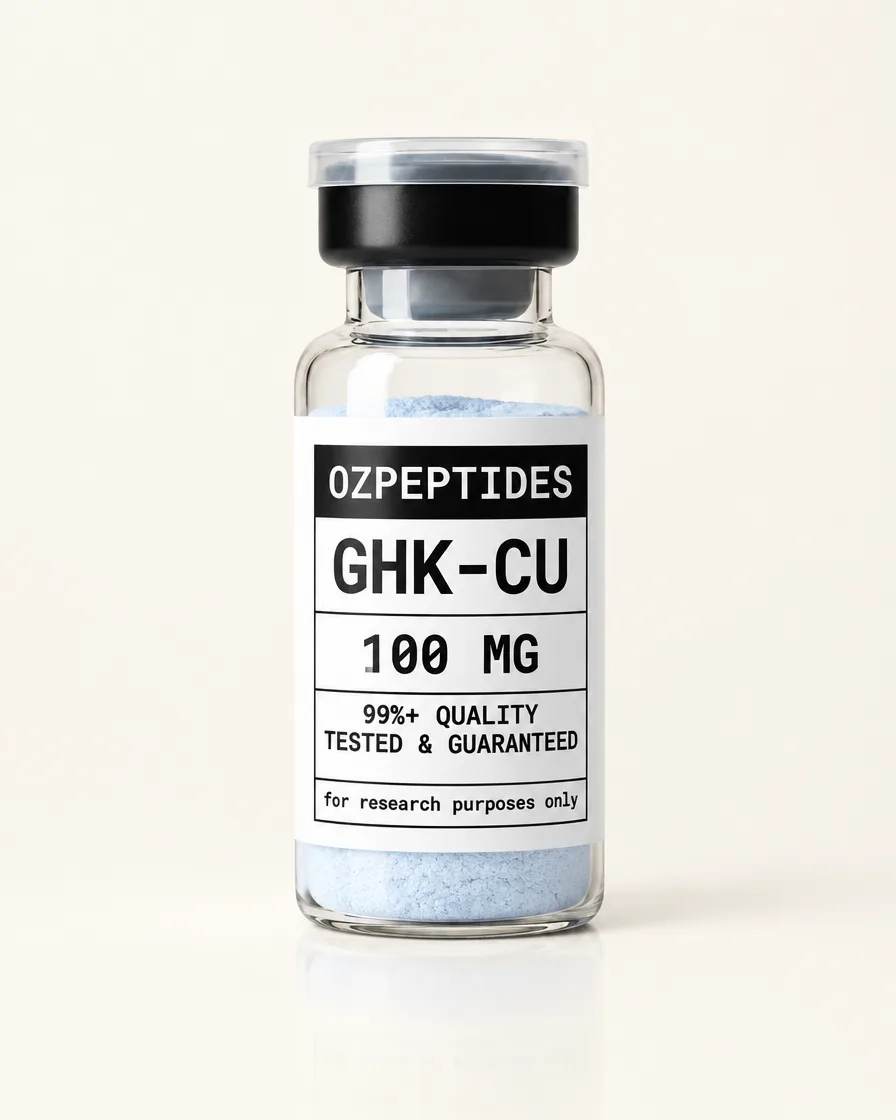
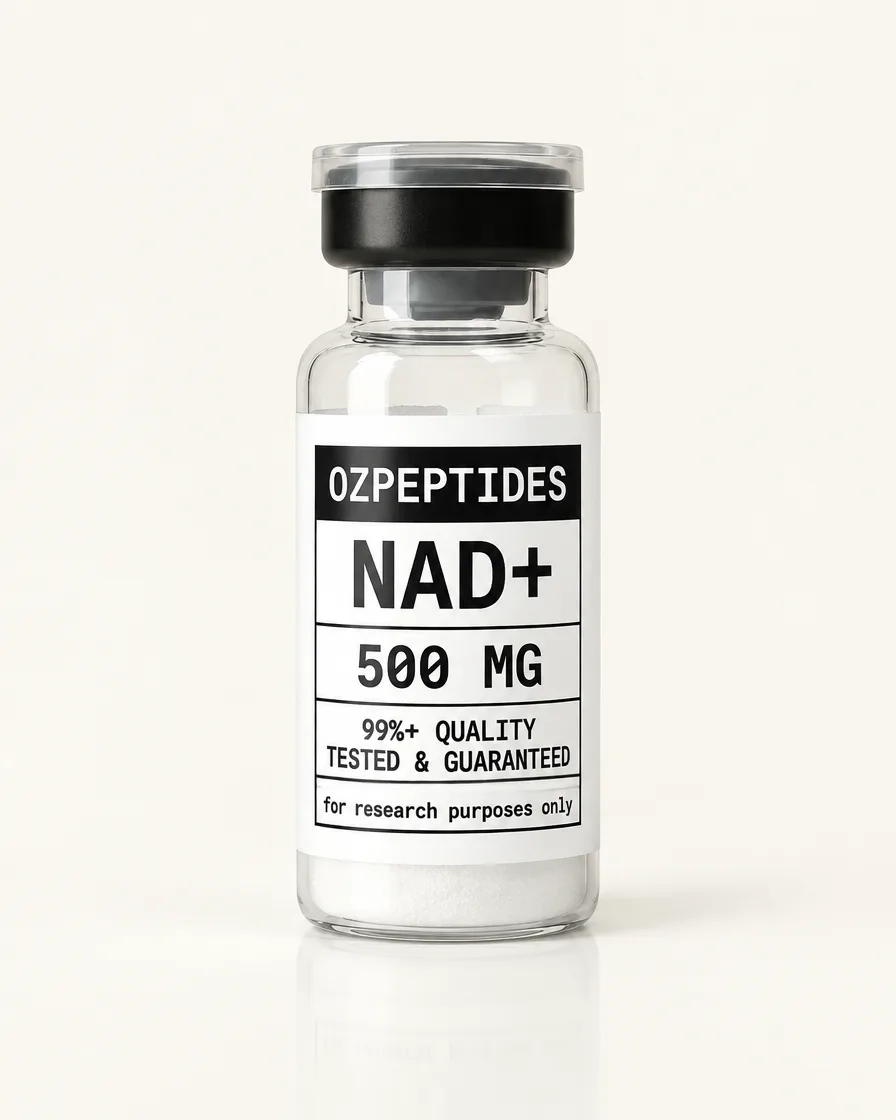
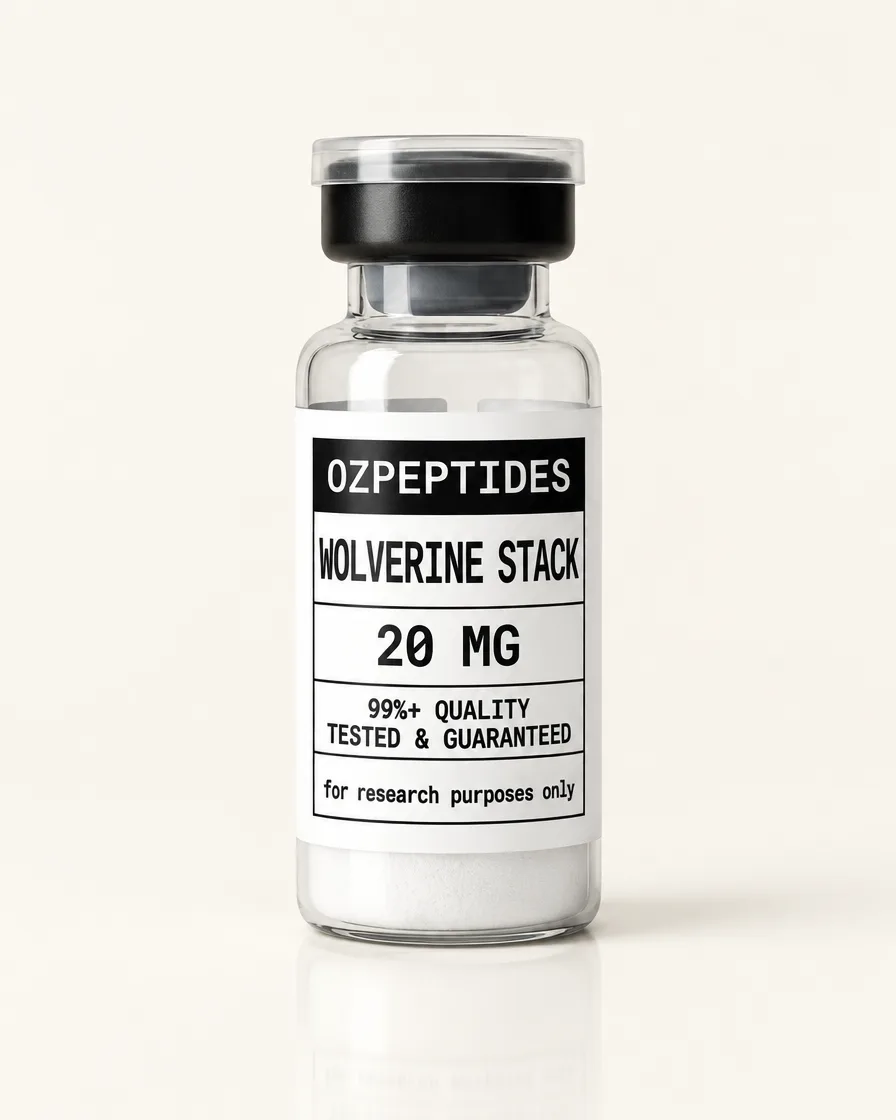
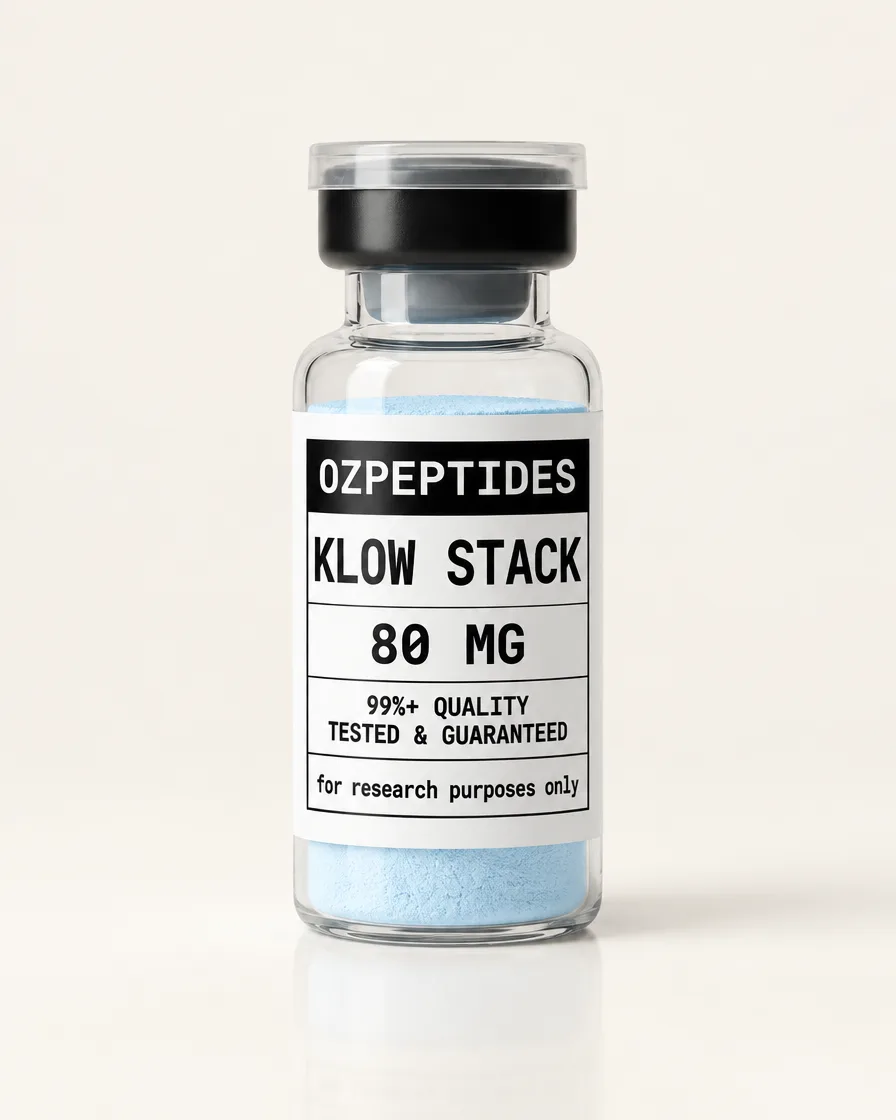
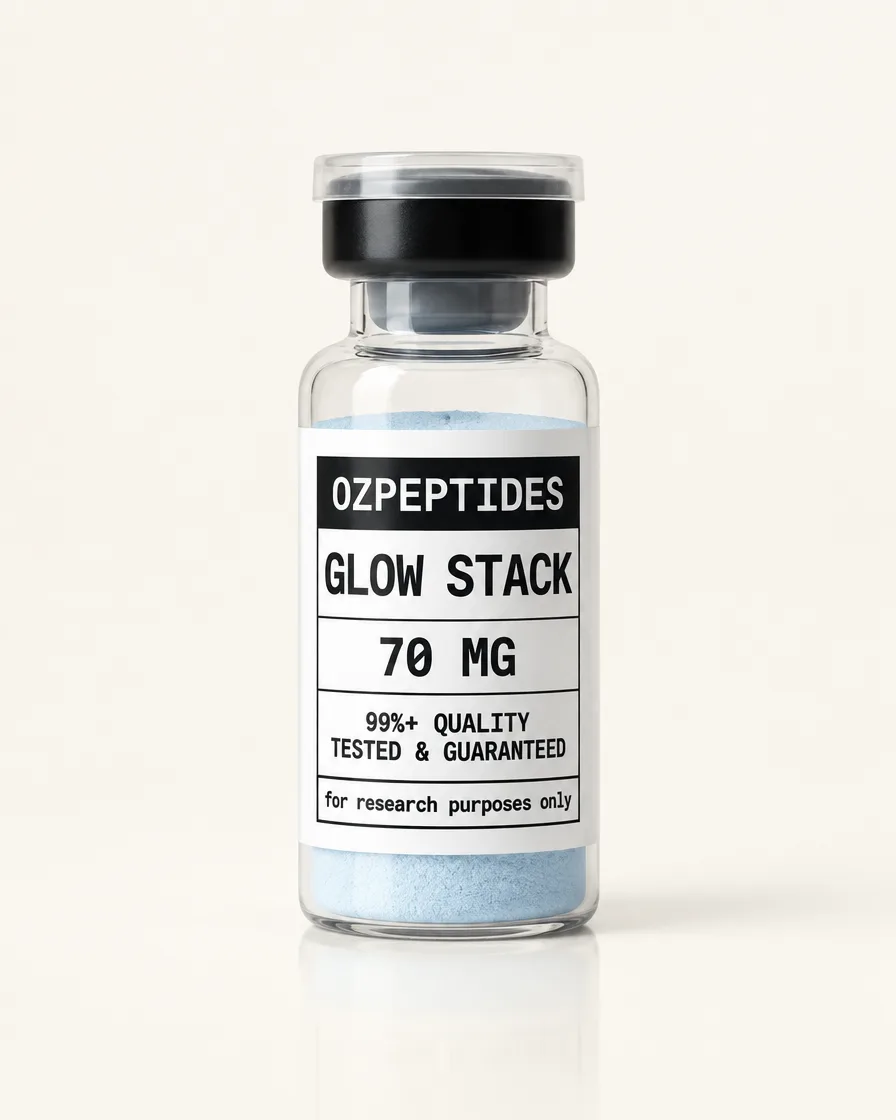
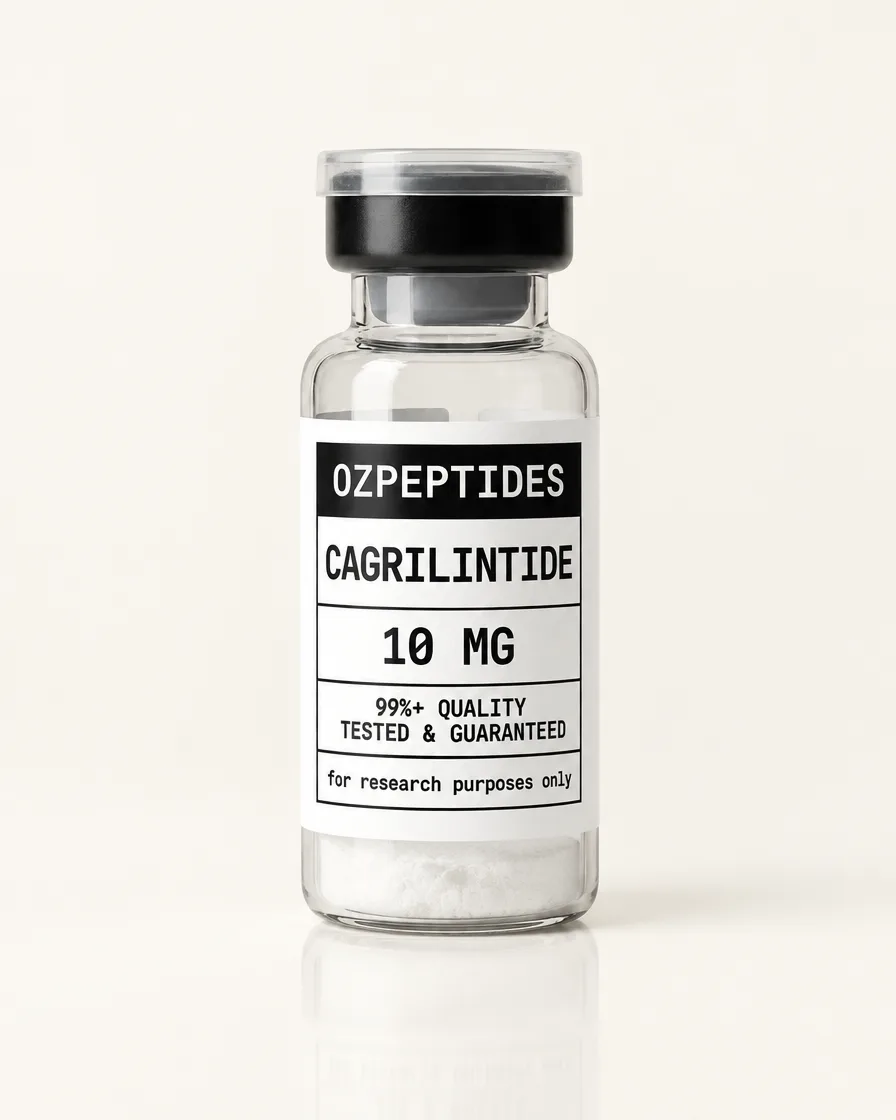
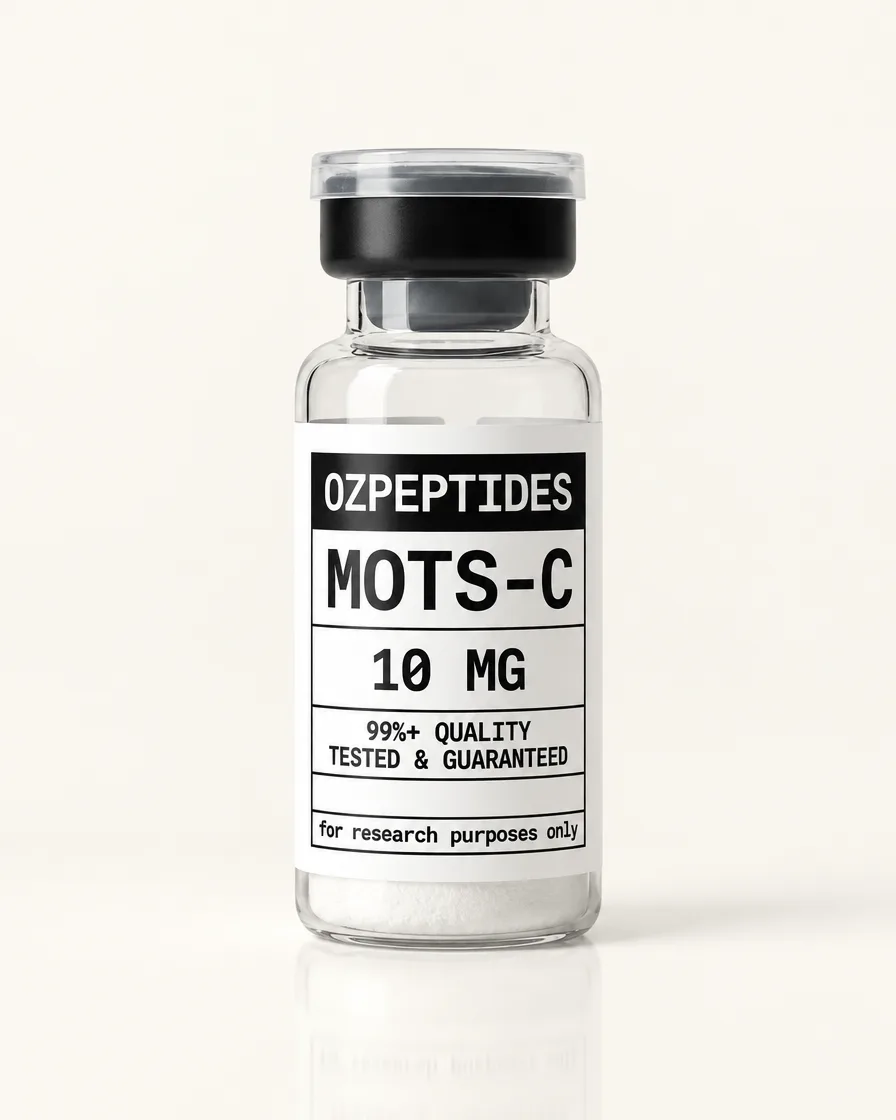
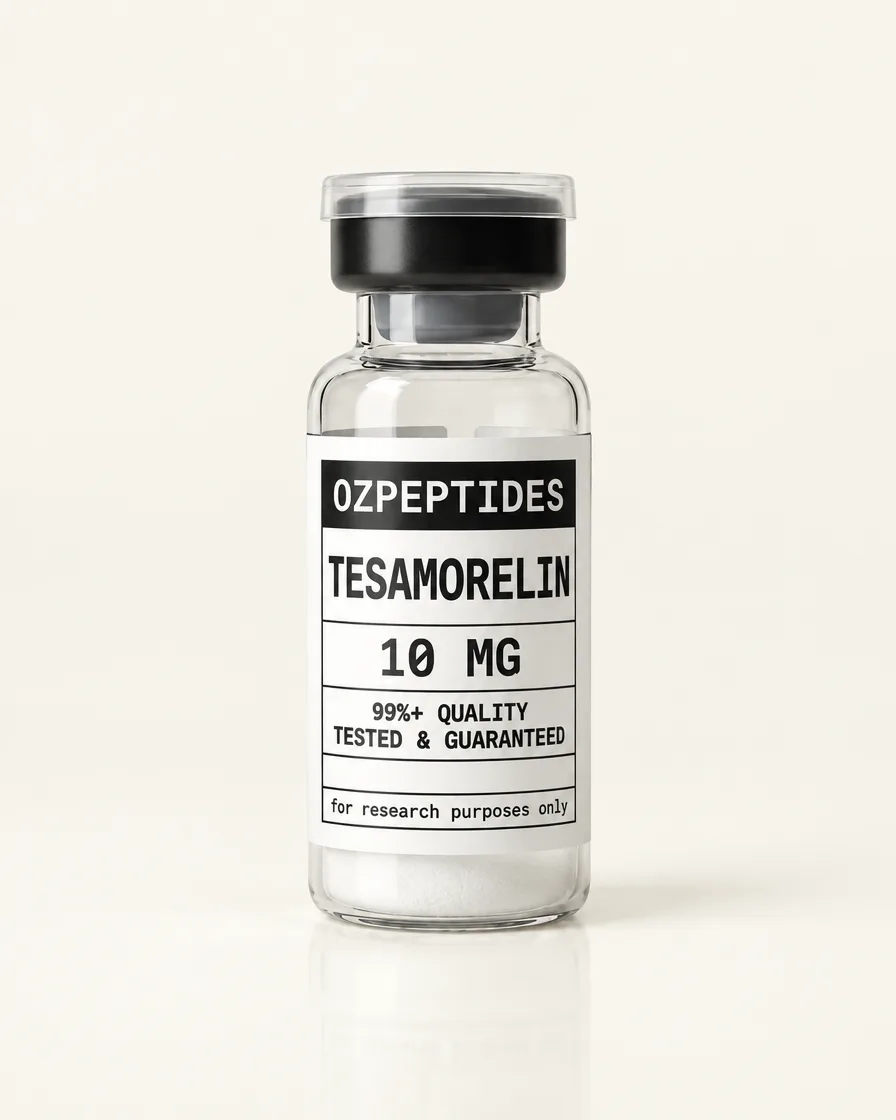
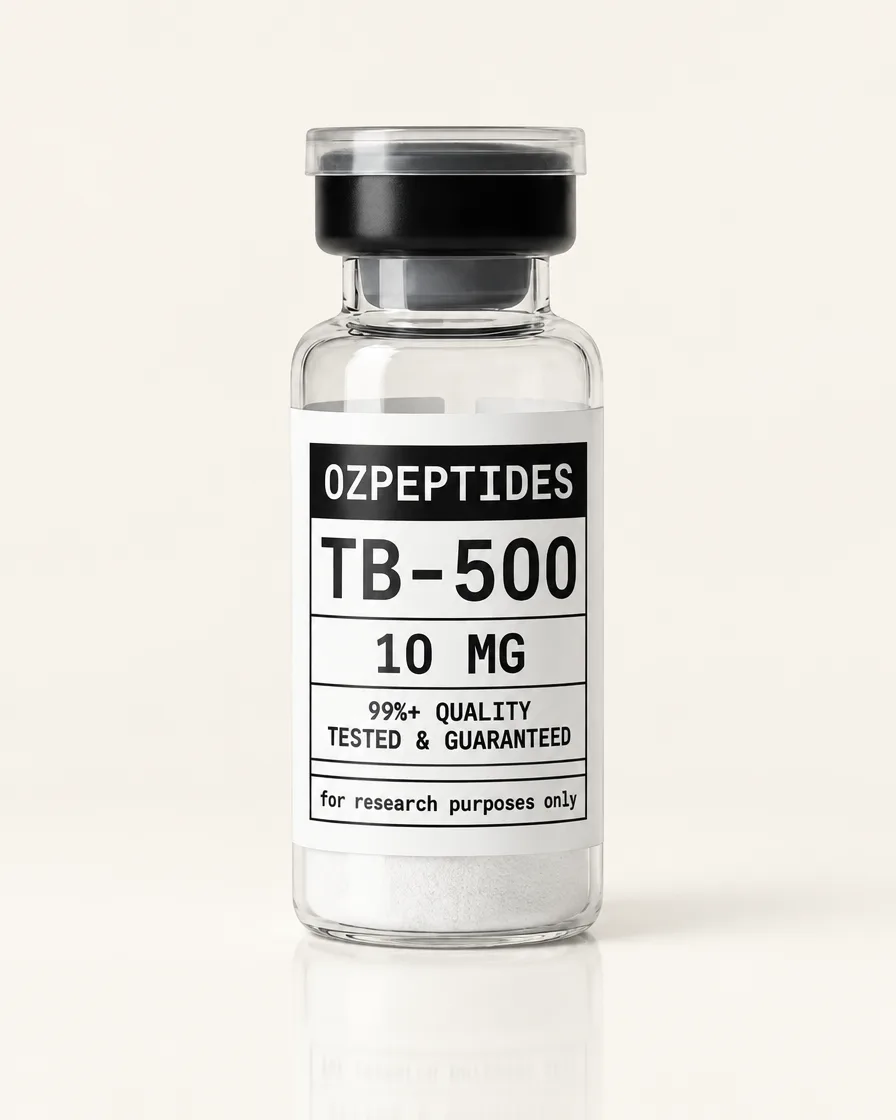
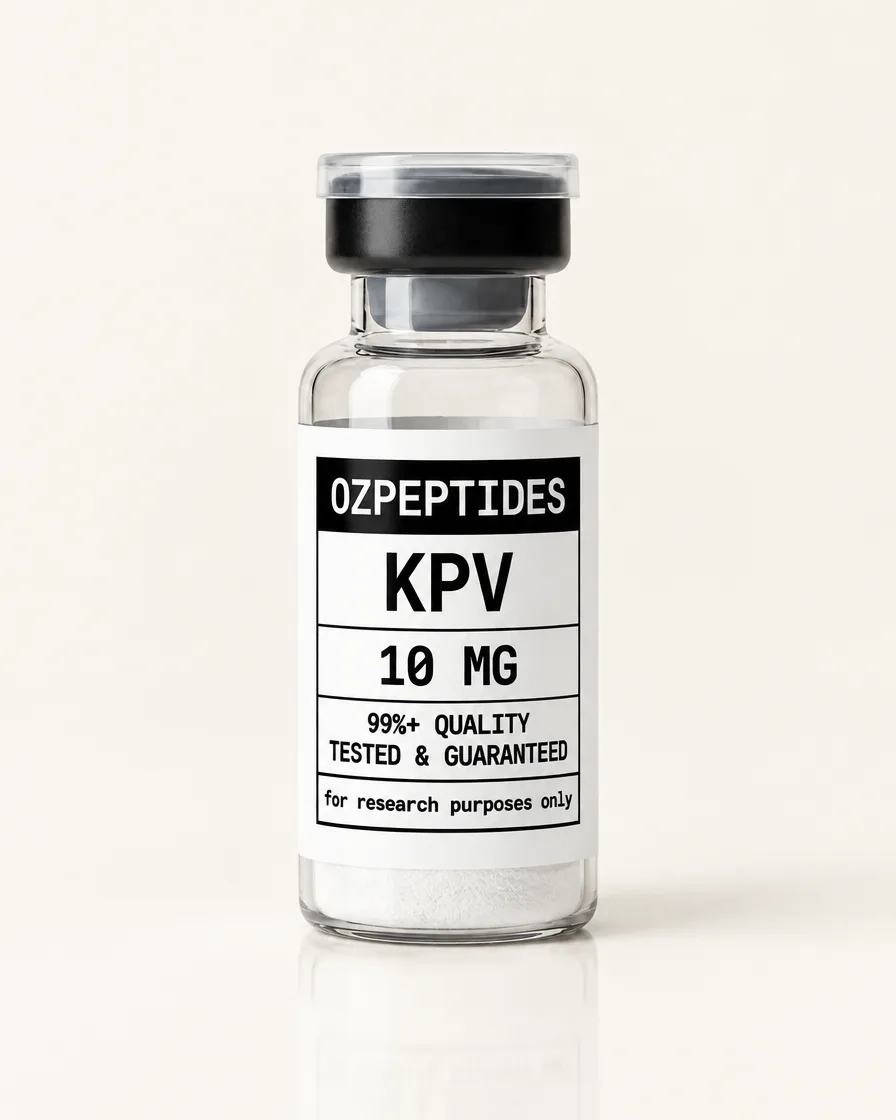
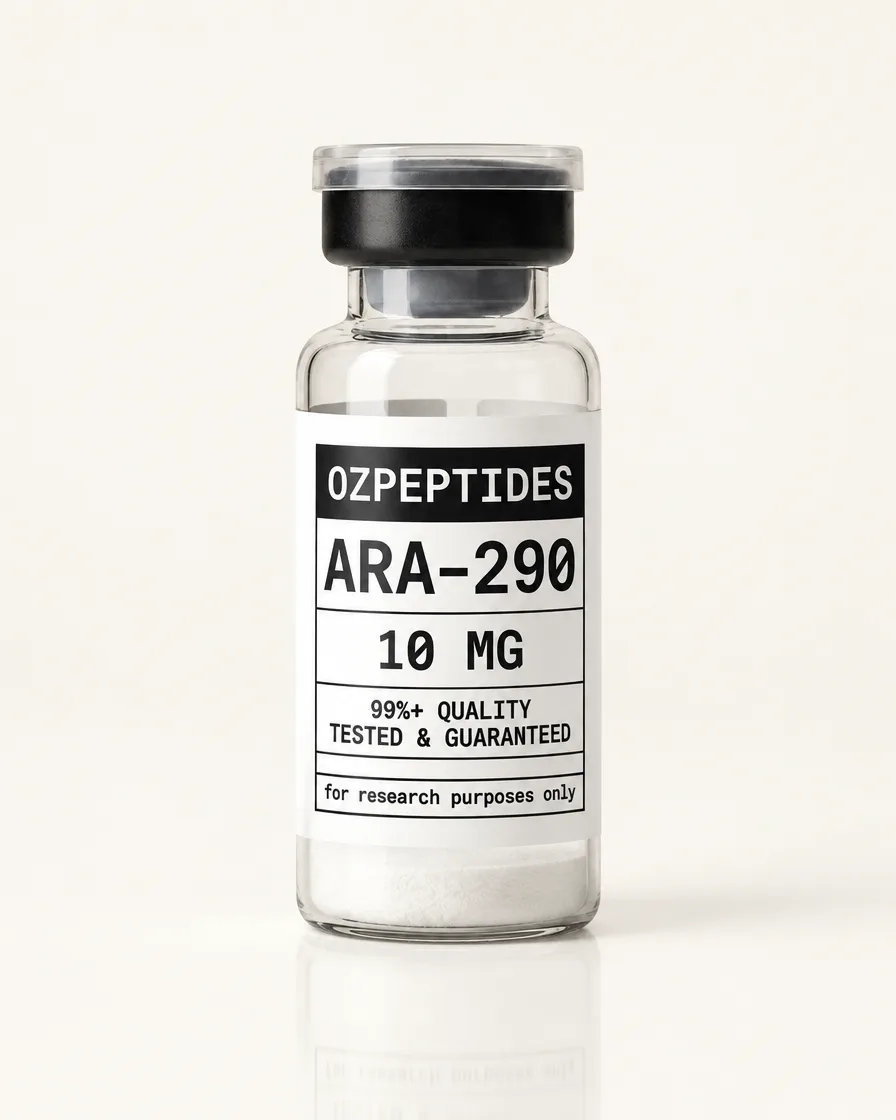
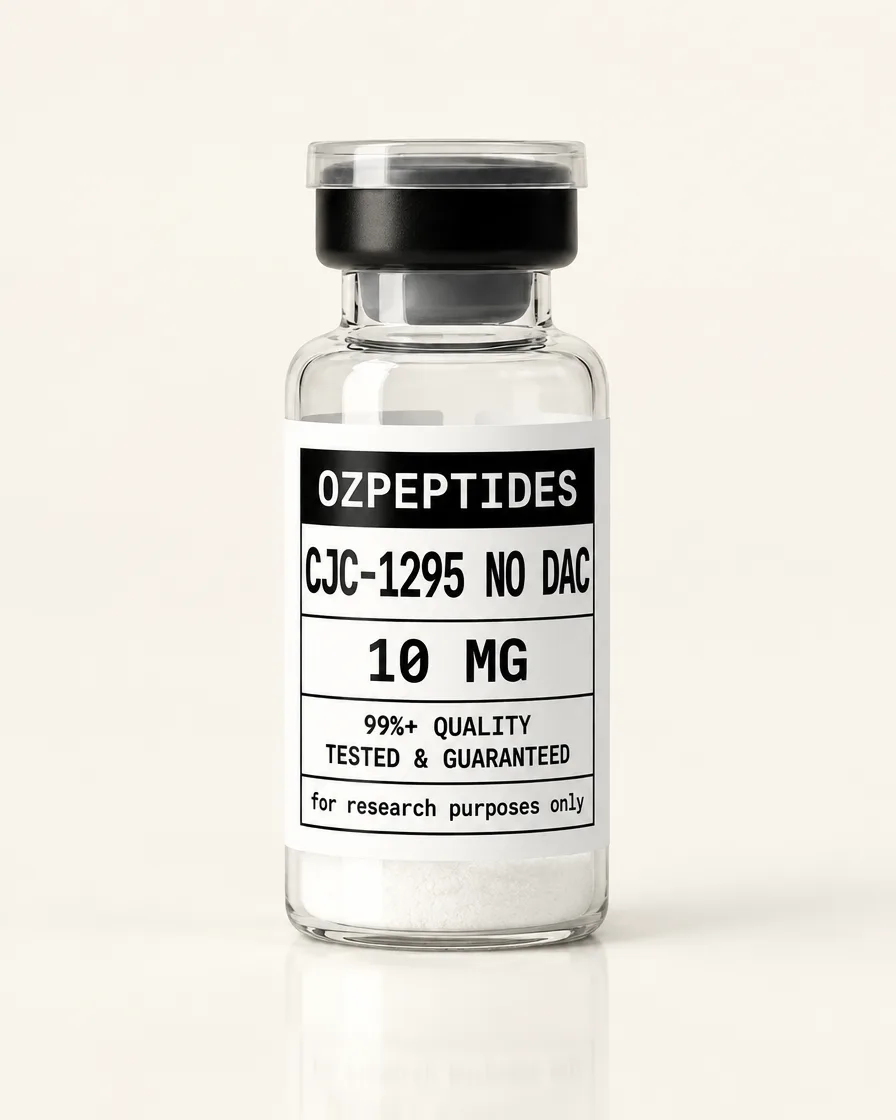
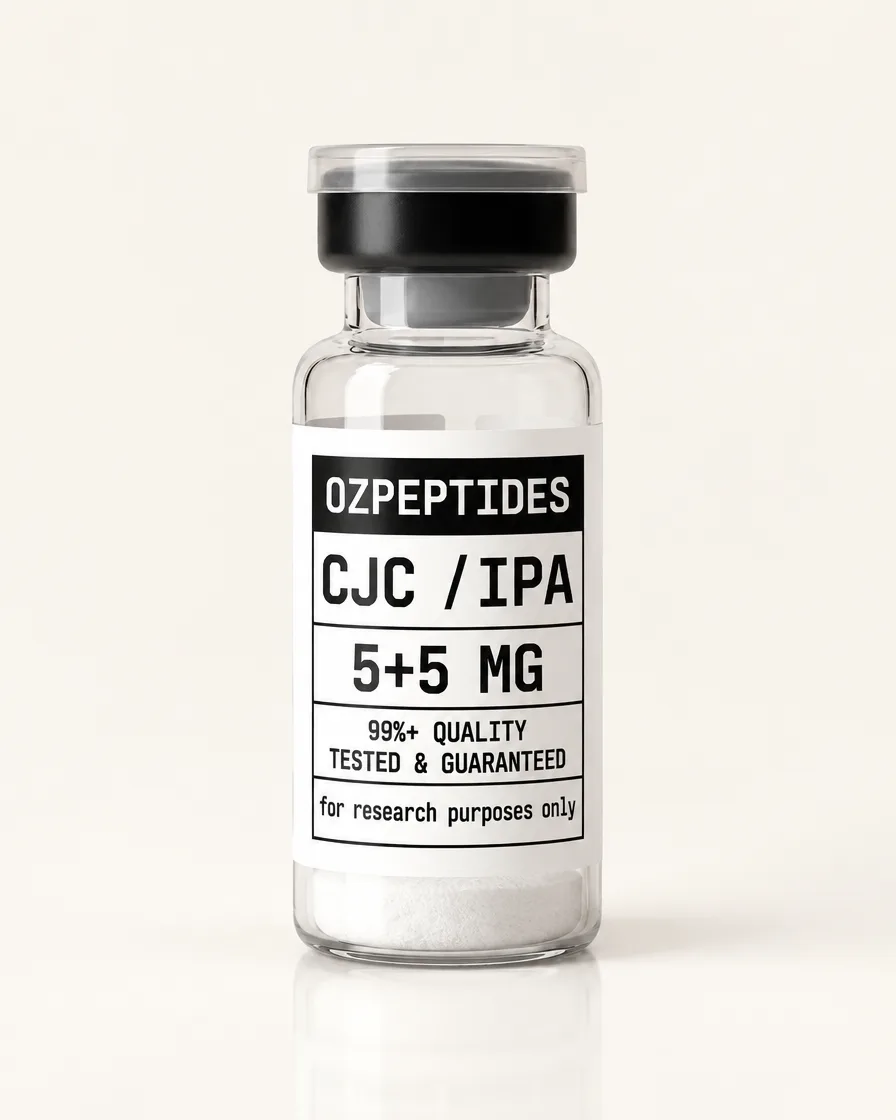
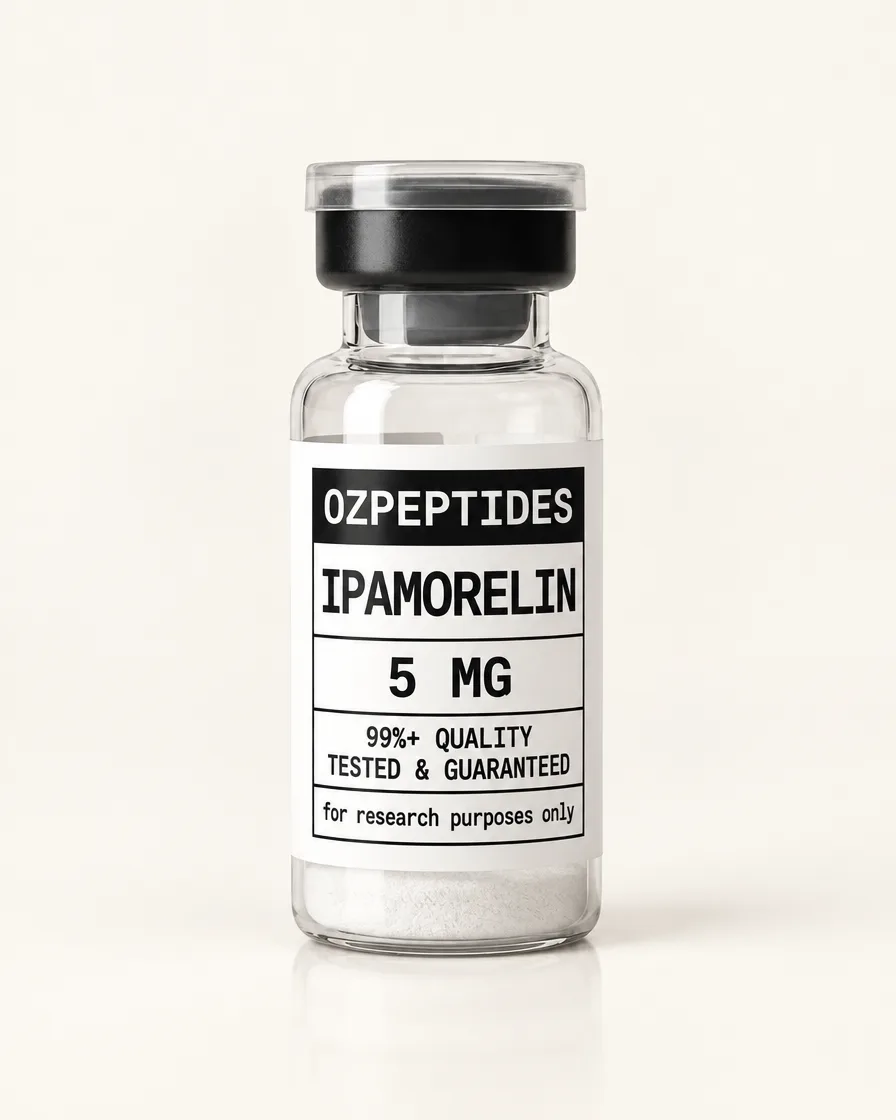
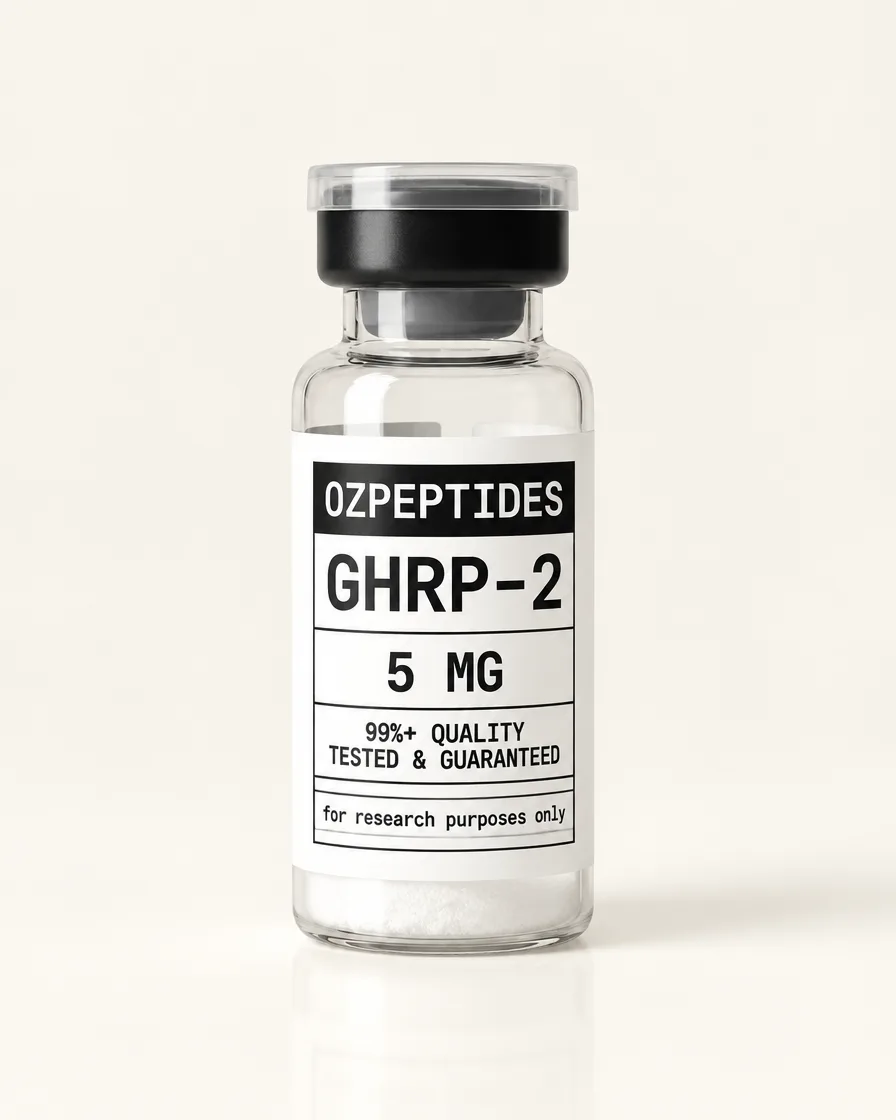
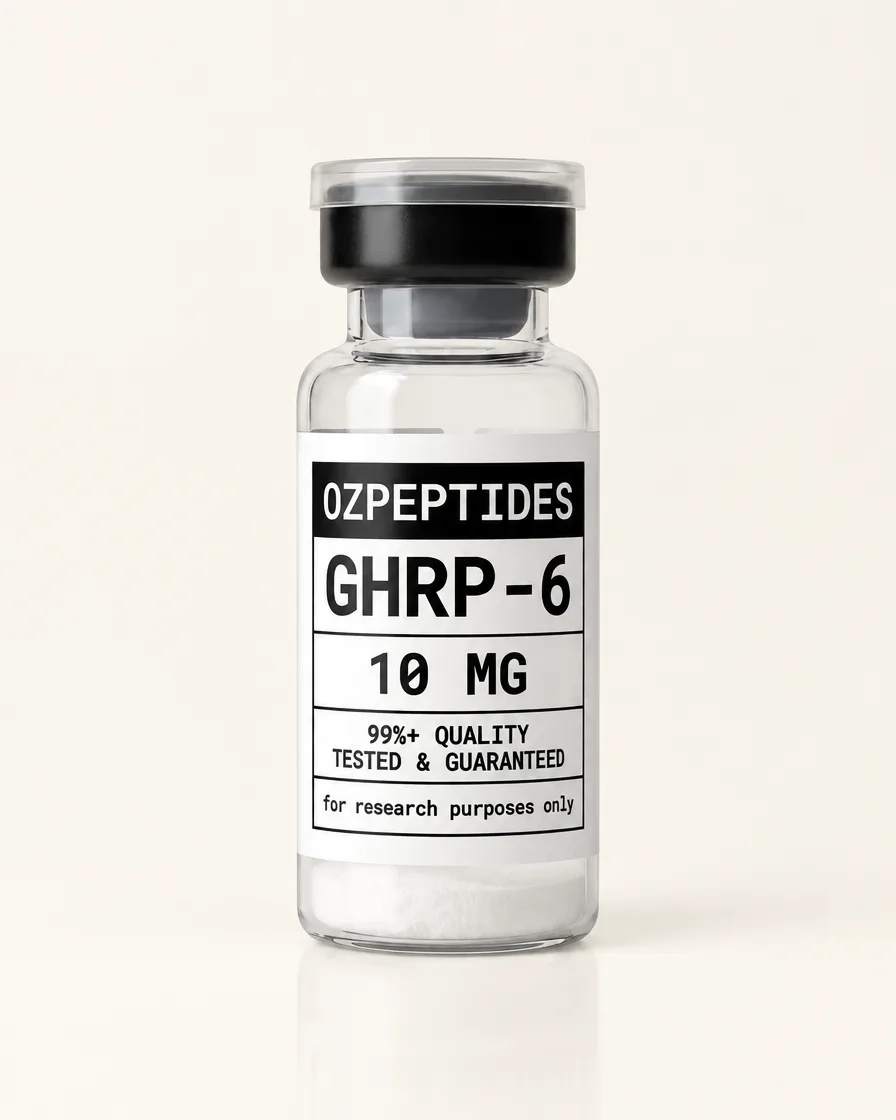
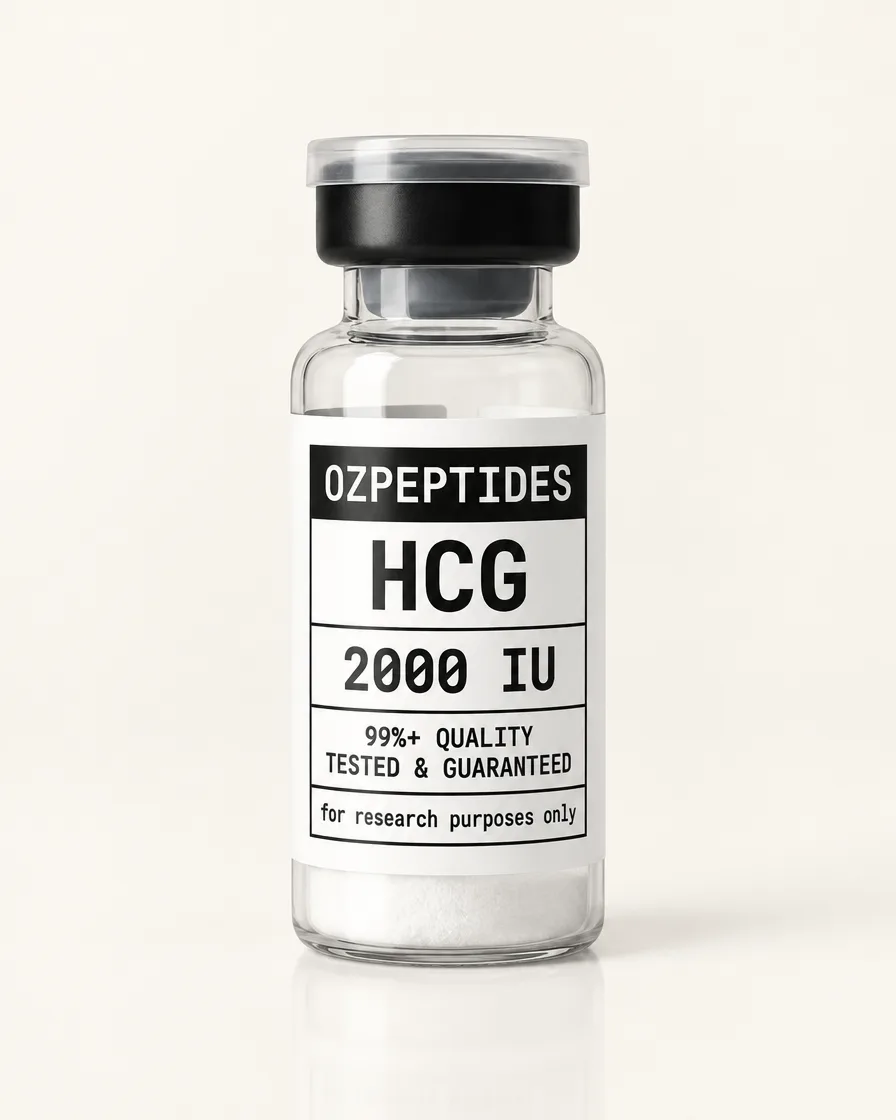
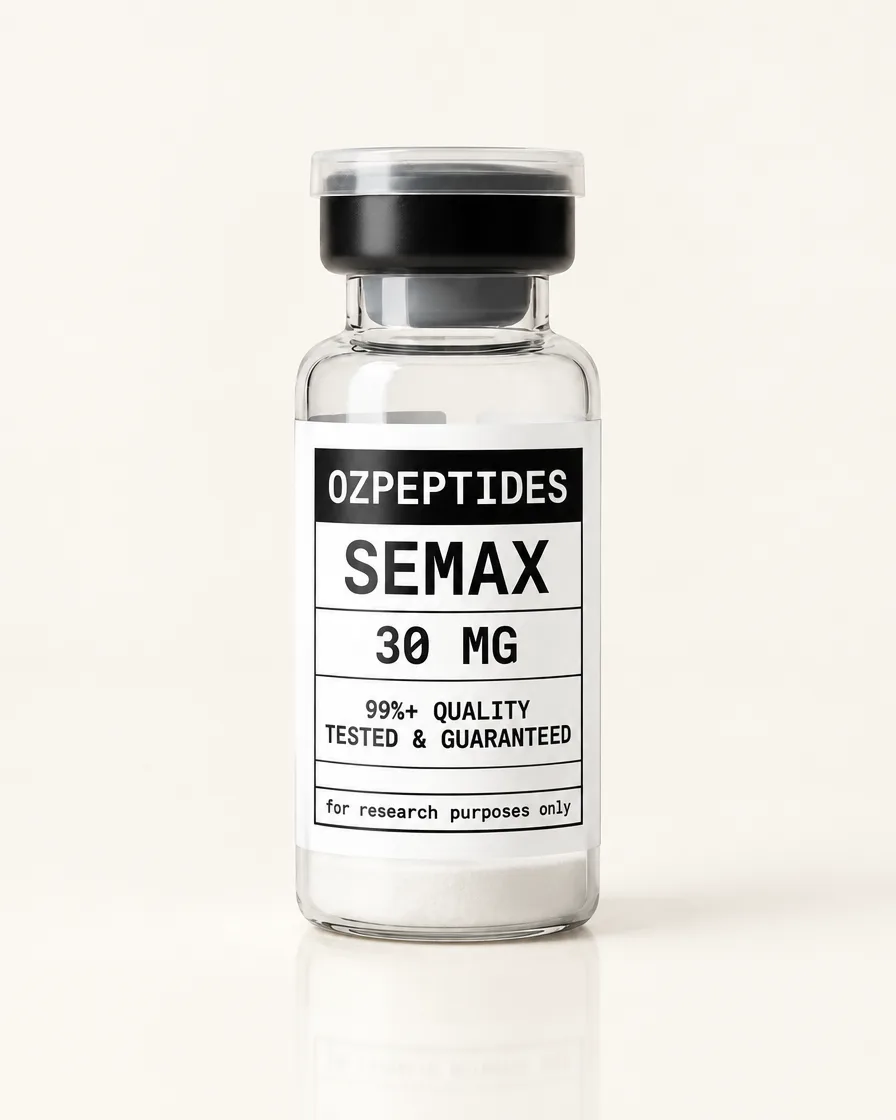
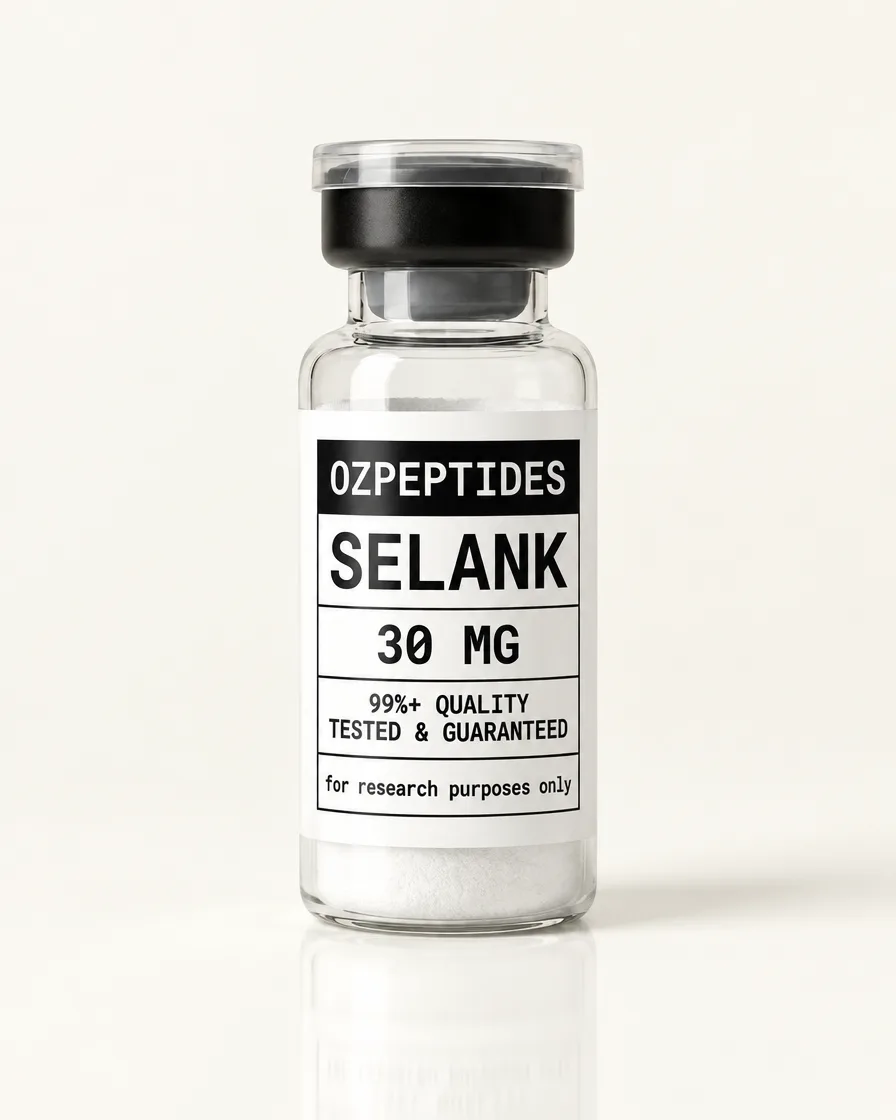
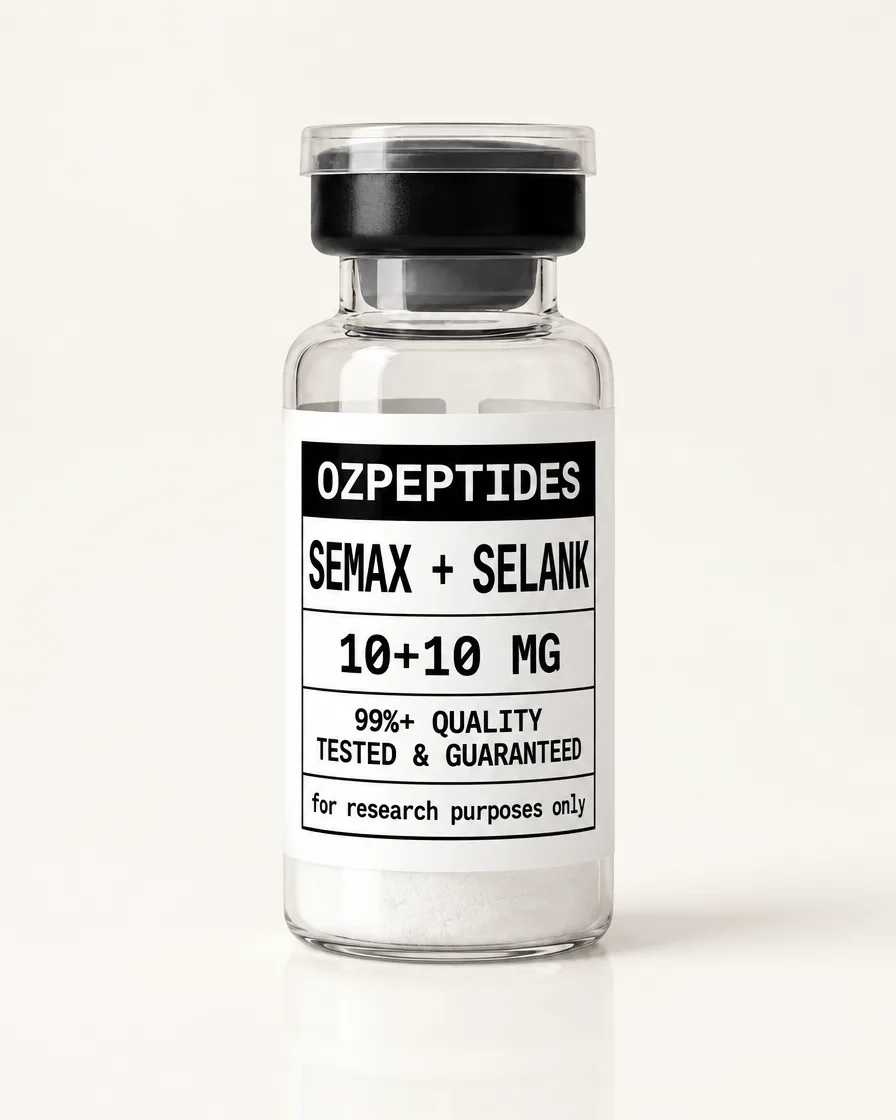
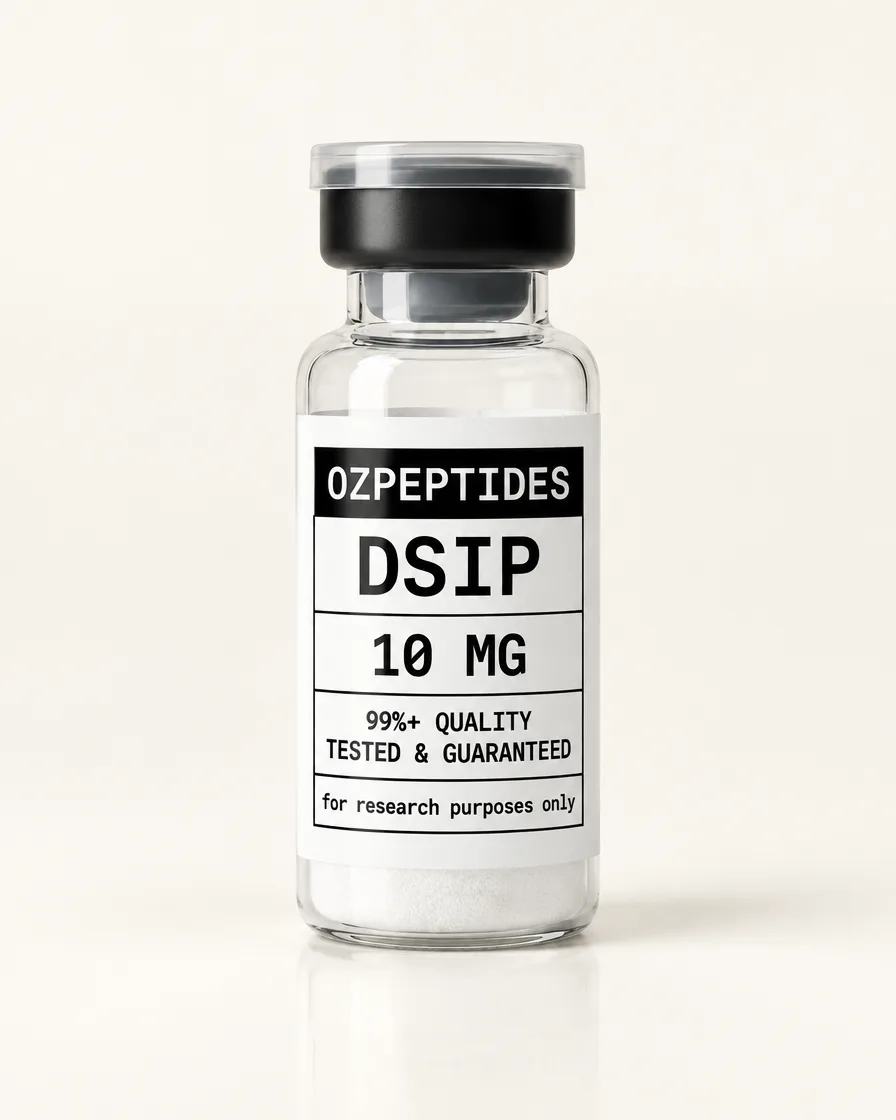
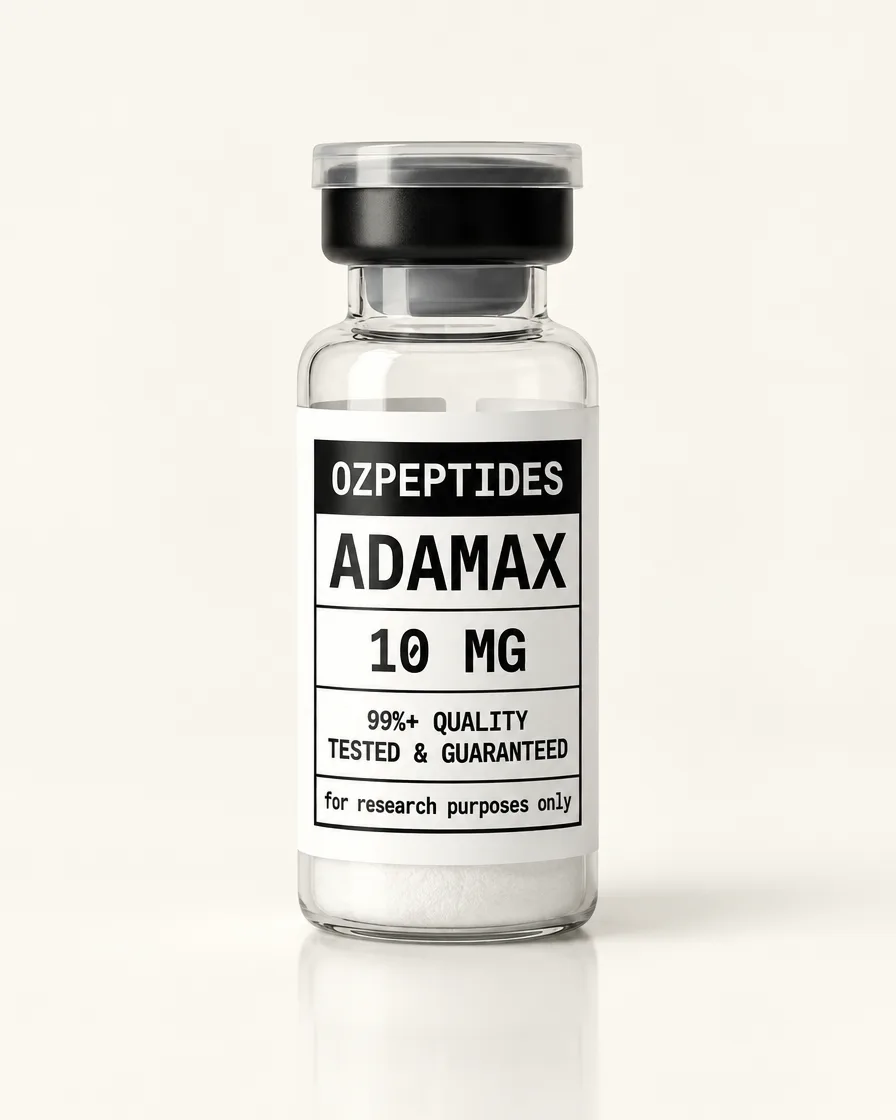
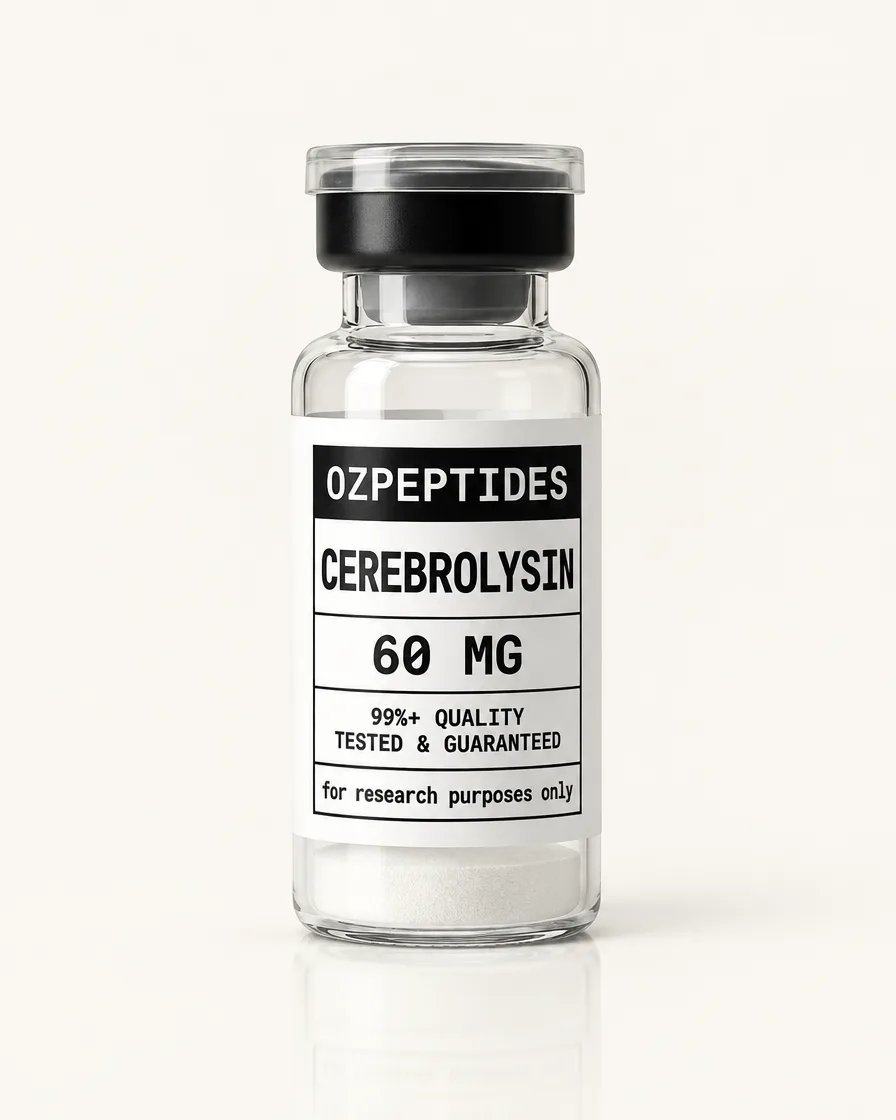
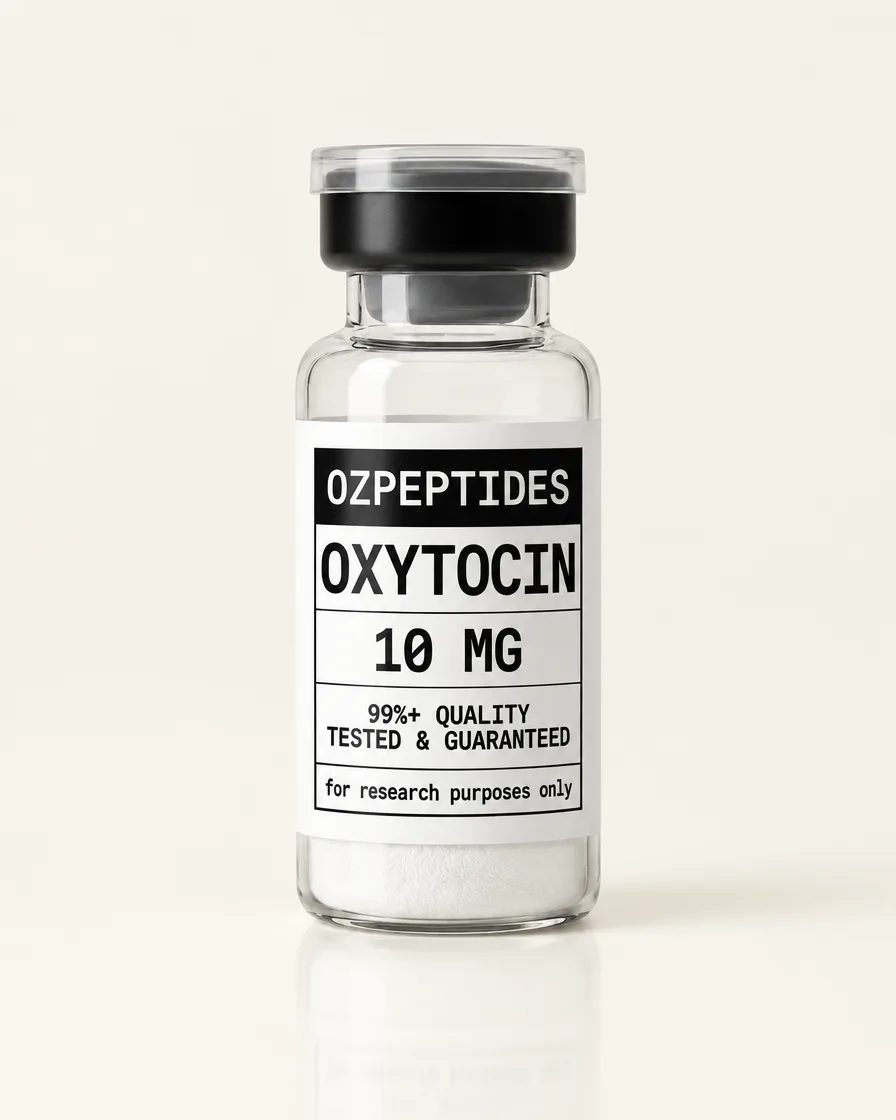
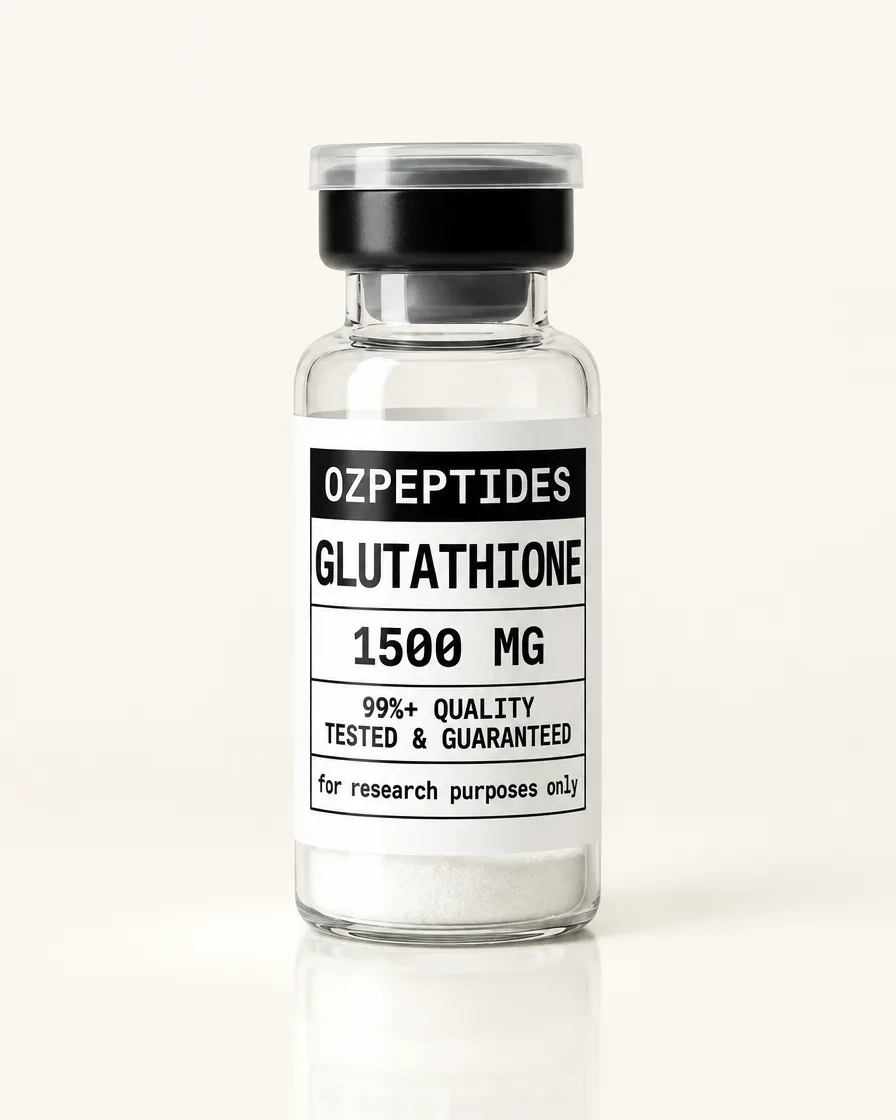
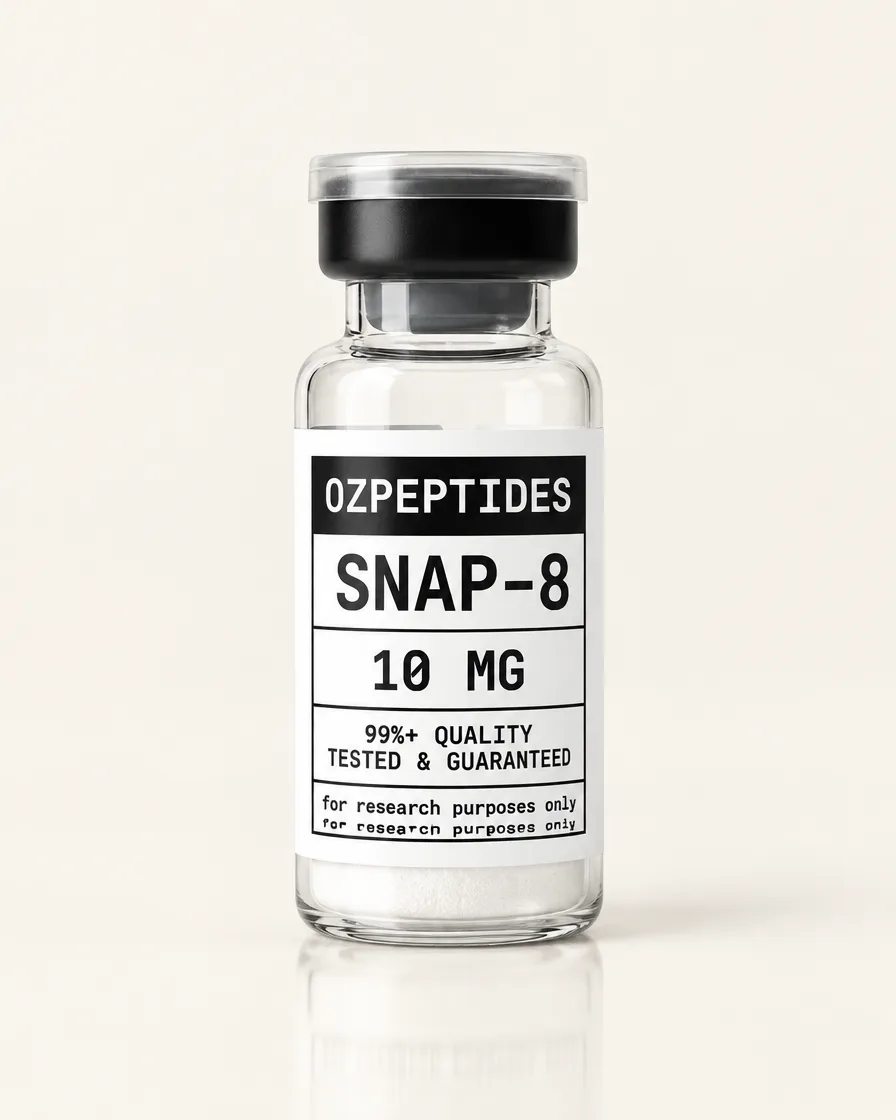
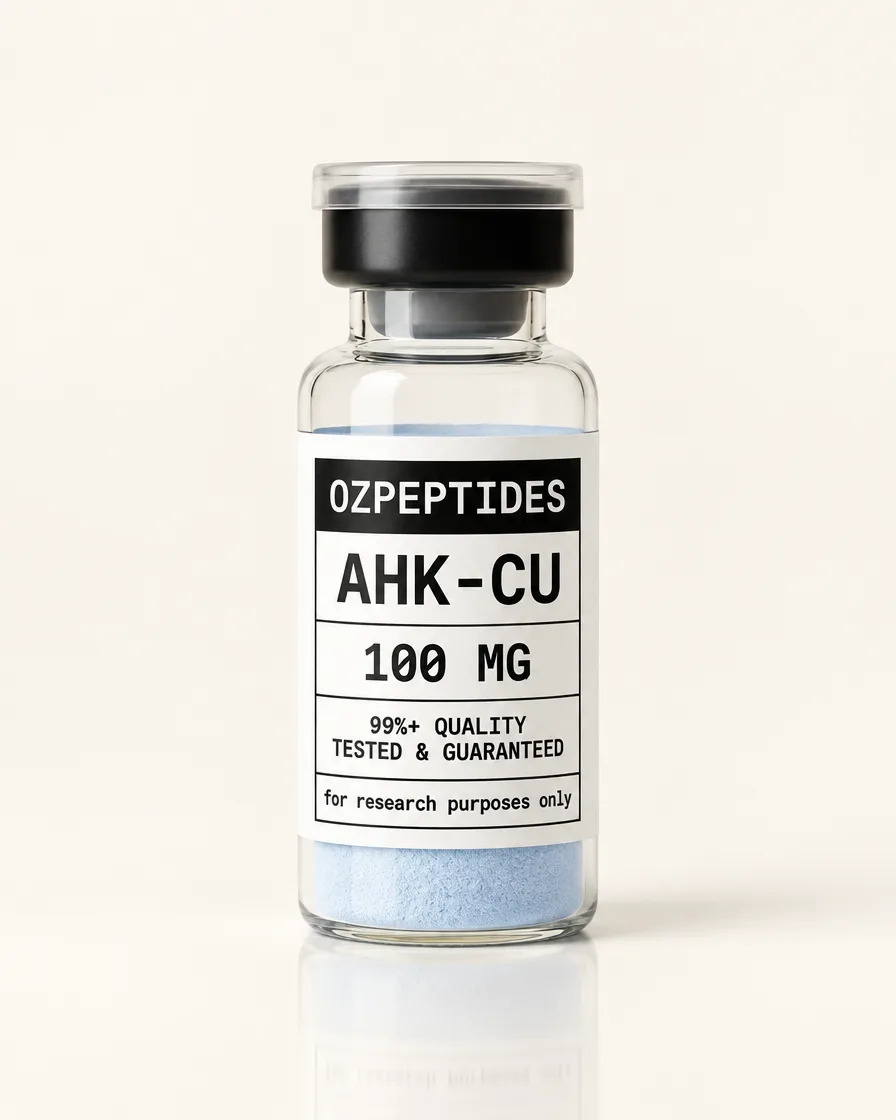
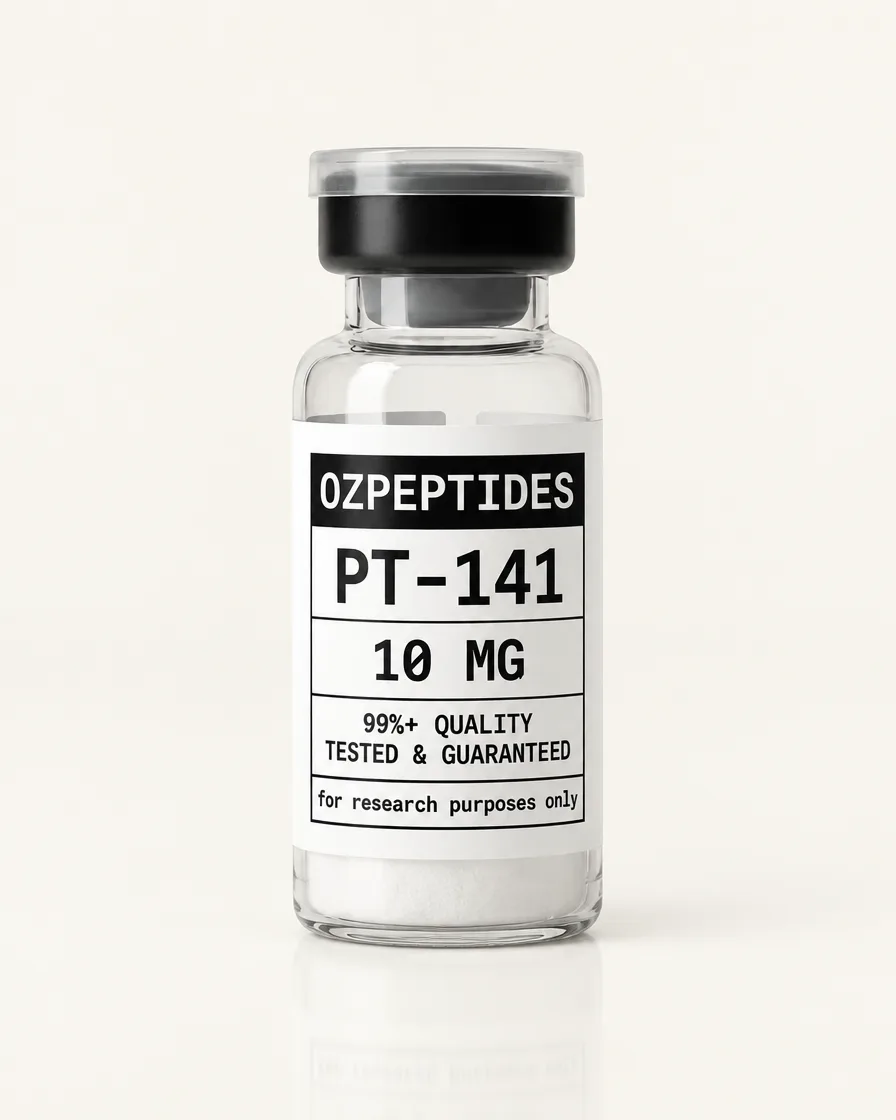
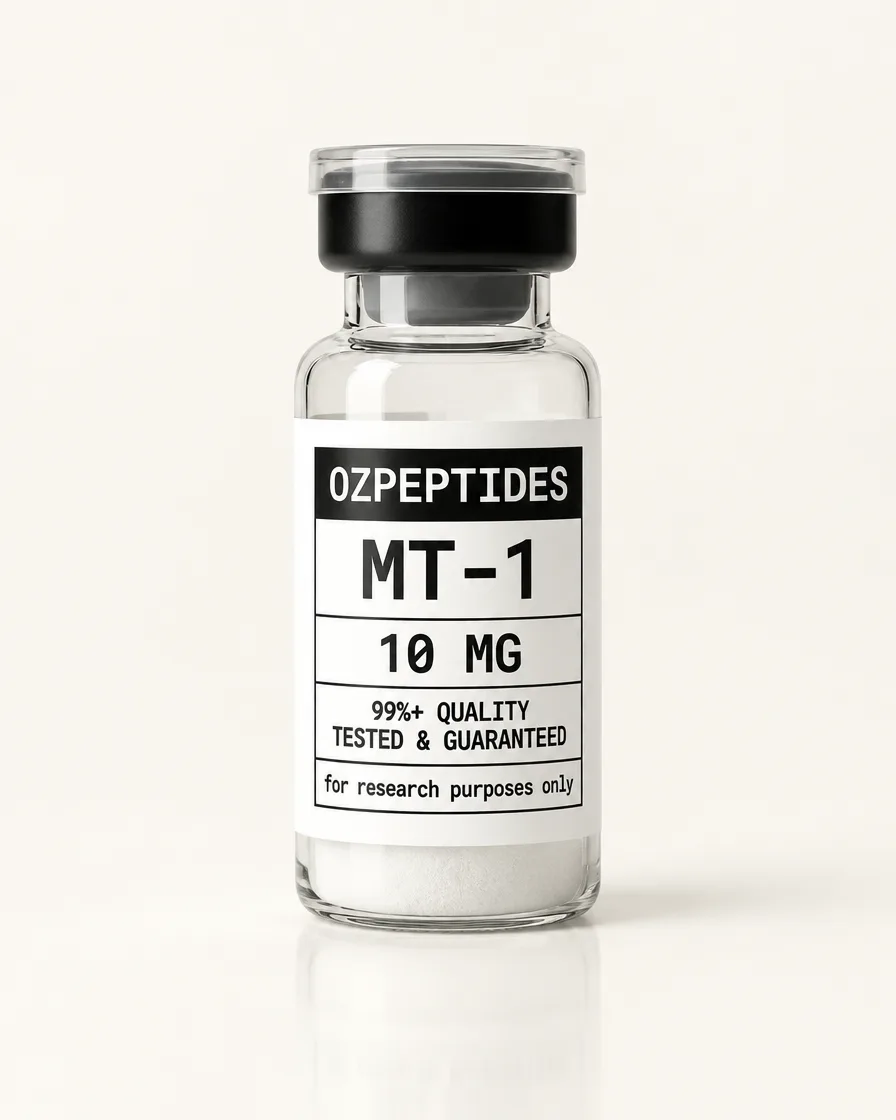
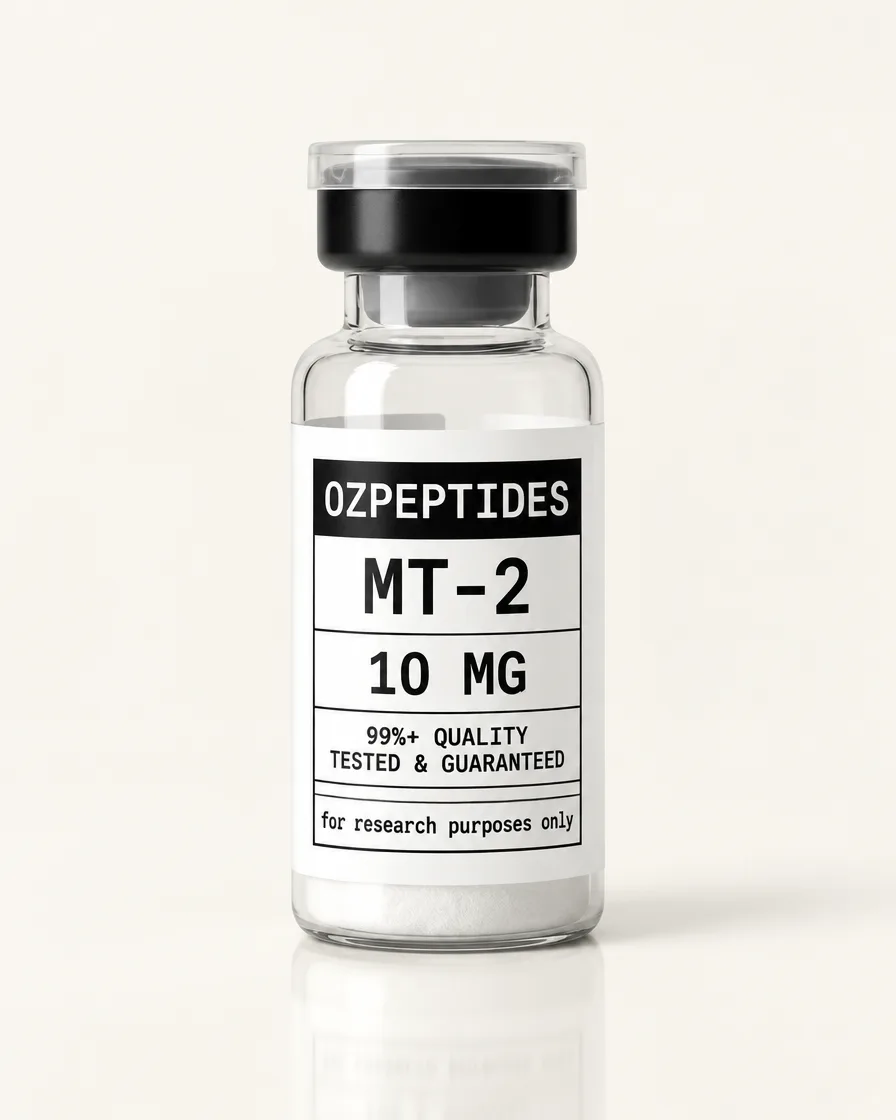
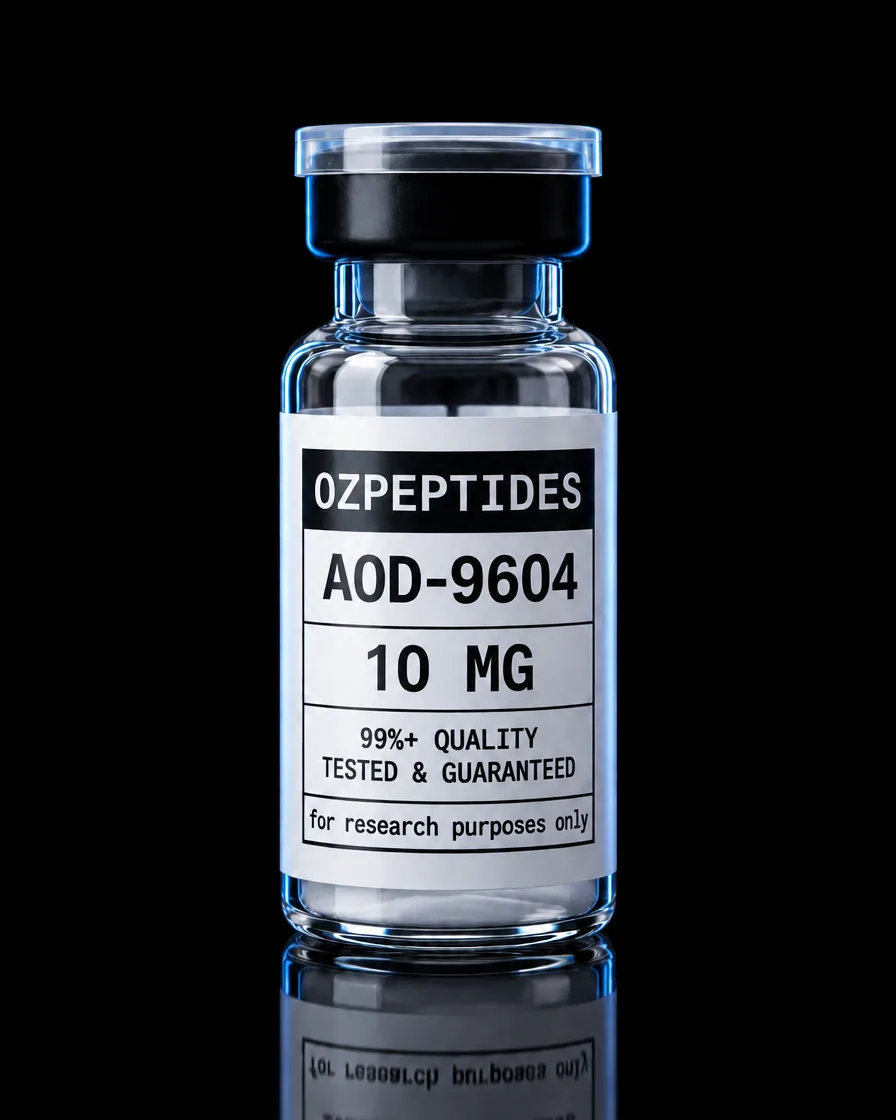
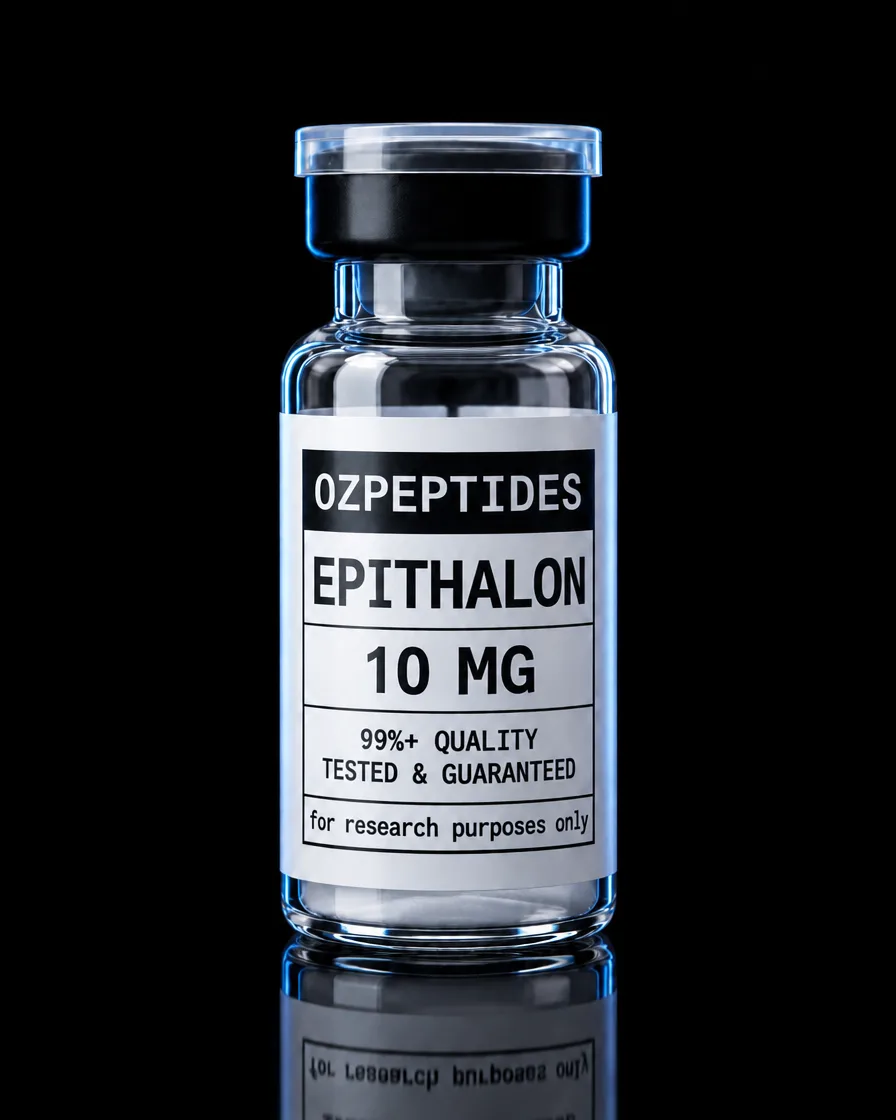
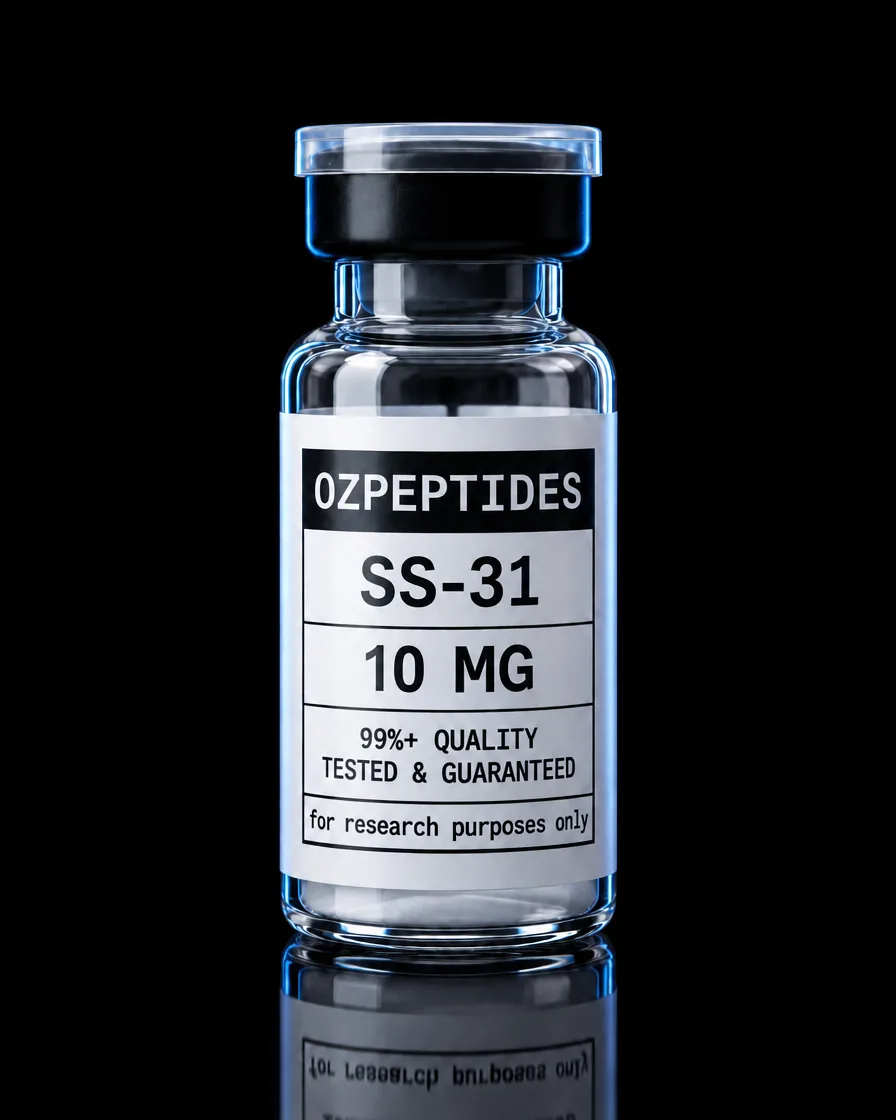
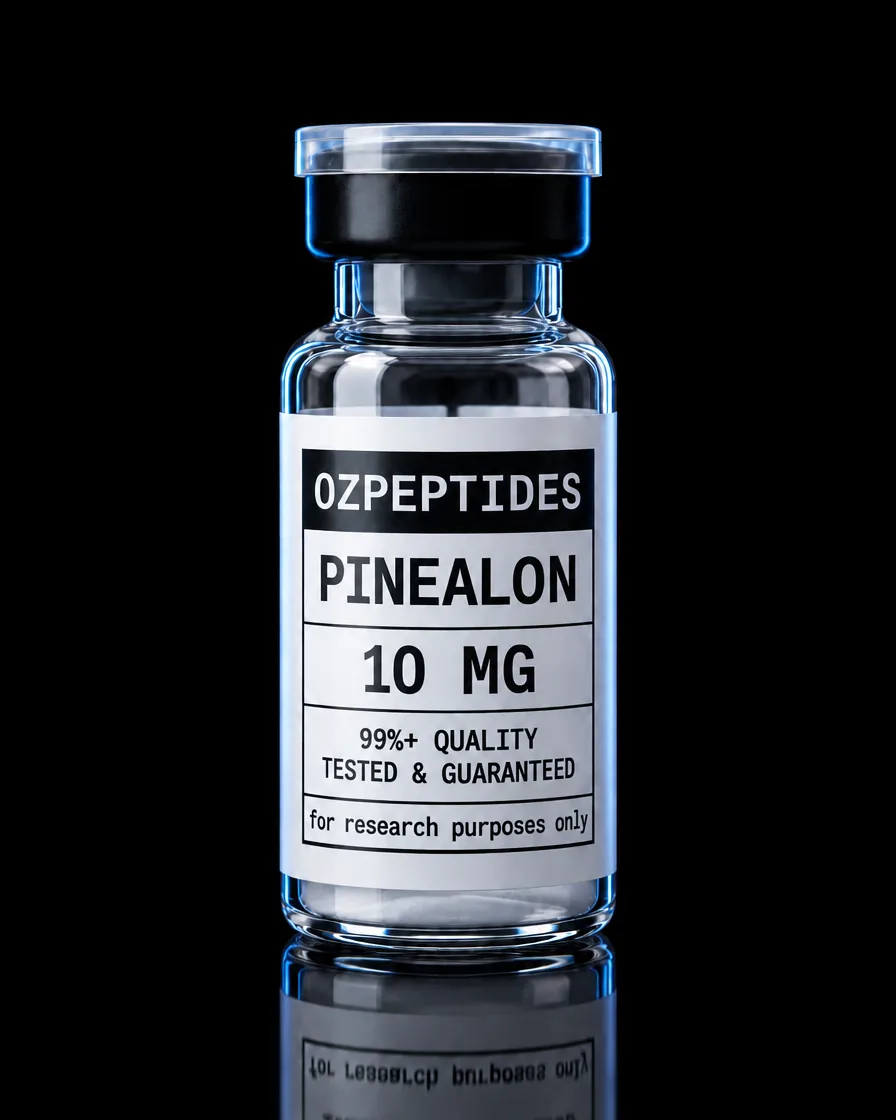
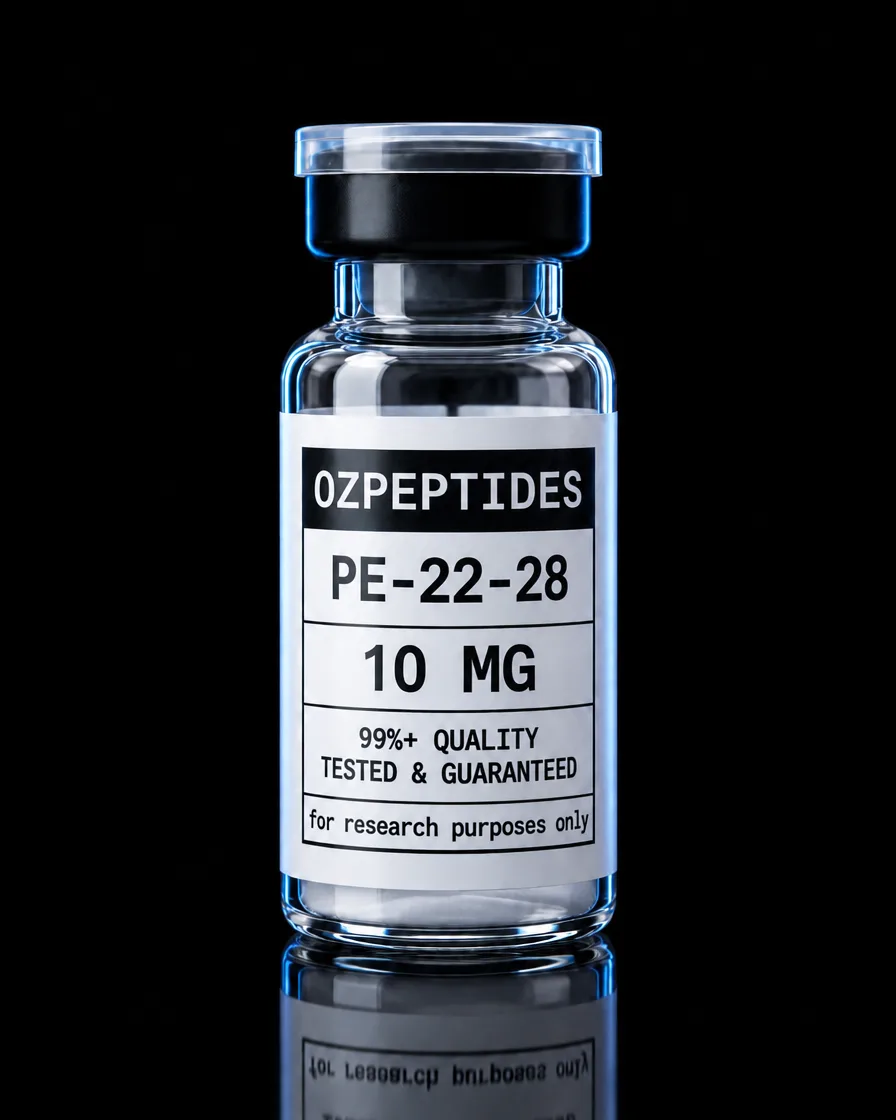
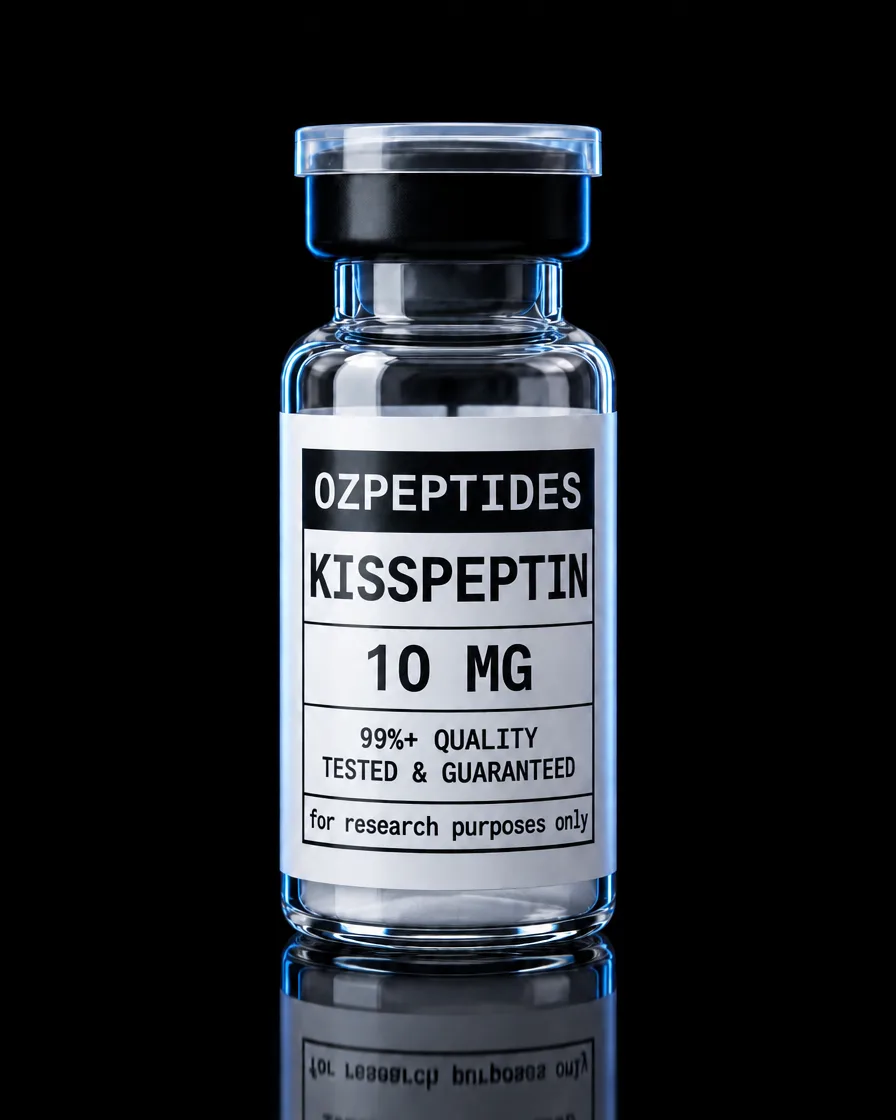
All compounds, made in Australia.
Our full range is synthesised, HPLC-tested and screened for heavy metals in-house before dispatch. Every vial carries a batch number that links to its certificate of analysis. Order three of the same product and the fourth is free.
Every compound OzPeptides makes, in one list. Forty-two peptides across seventy product codes, synthesised and batch-tested in our own lab in Blacktown, NSW, and supplied for in-vitro and laboratory research only. The categories above split the same catalogue by what each compound is studied for; this page is the whole range.
Made here, not imported and relabelled
Most research peptides sold in Australia are imported in bulk and relabelled locally. That means the testing that matters happened somewhere else, if it happened at all, and the certificate that arrives with the vial is one the buyer cannot trace back to the batch in their hand.
We synthesise and test in the same facility. Every batch is confirmed by mass spectrometry, measured at ≥99% purity by HPLC, and screened at 0 ppm heavy metals, and the batch number printed on each vial resolves to that batch's own certificate of analysis. Certificates are sent on request.
The practical consequences are a shorter chain between synthesis and vial, no customs risk in the middle of it, and same-day dispatch from Sydney on orders placed before the daily cut-off. That is the argument for buying locally made rather than a patriotic one.
How to read a listing
Each compound is listed by name with the strengths we make it in, and every strength has its own page because every strength has its own arithmetic: what is in the vial, what it costs per milligram, what a reconstitution yields, and how many draws it holds. Price per milligram is rarely linear across vial sizes, since synthesis, testing and fill costs are largely fixed per batch, so larger vials are usually better value.
Blends are labelled by their components rather than by a single total, because with a combination the per-compound figure is the one that means something. Comparing a blend to a single peptide on price per milligram is misleading in both directions — the milligrams are not of the same thing.
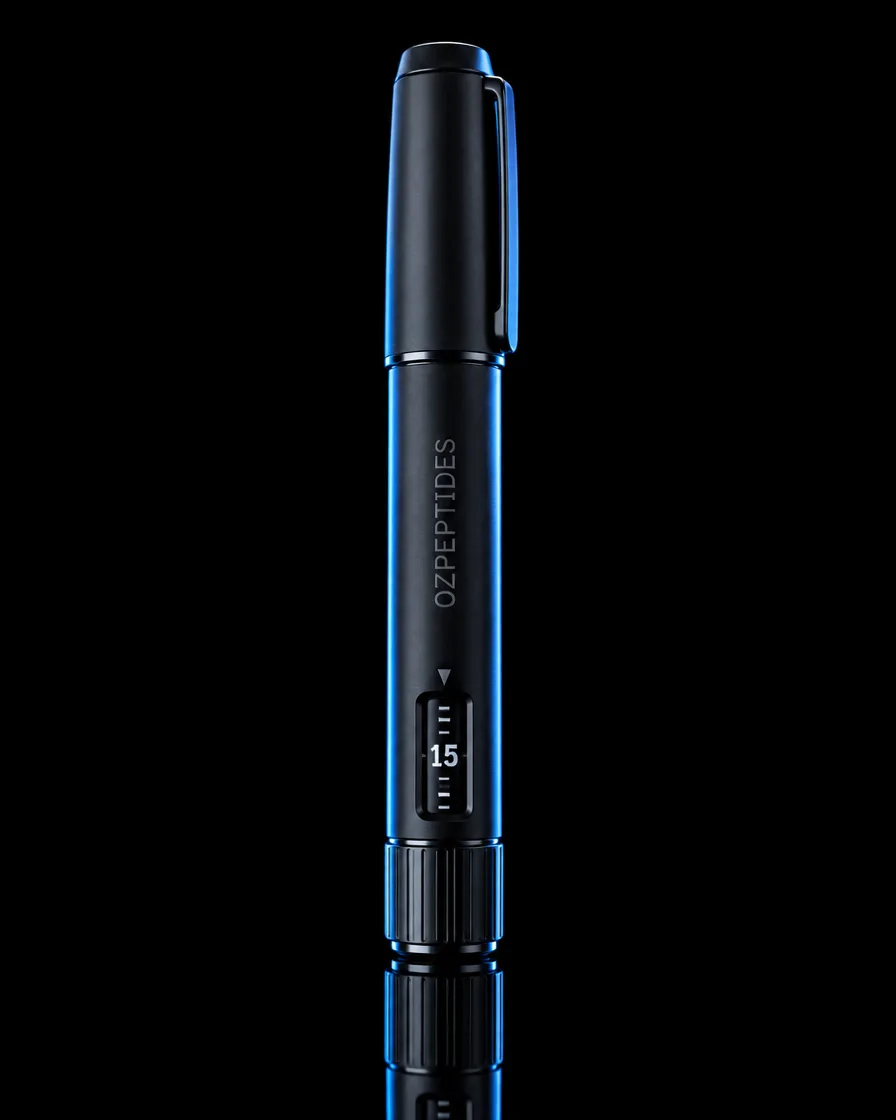
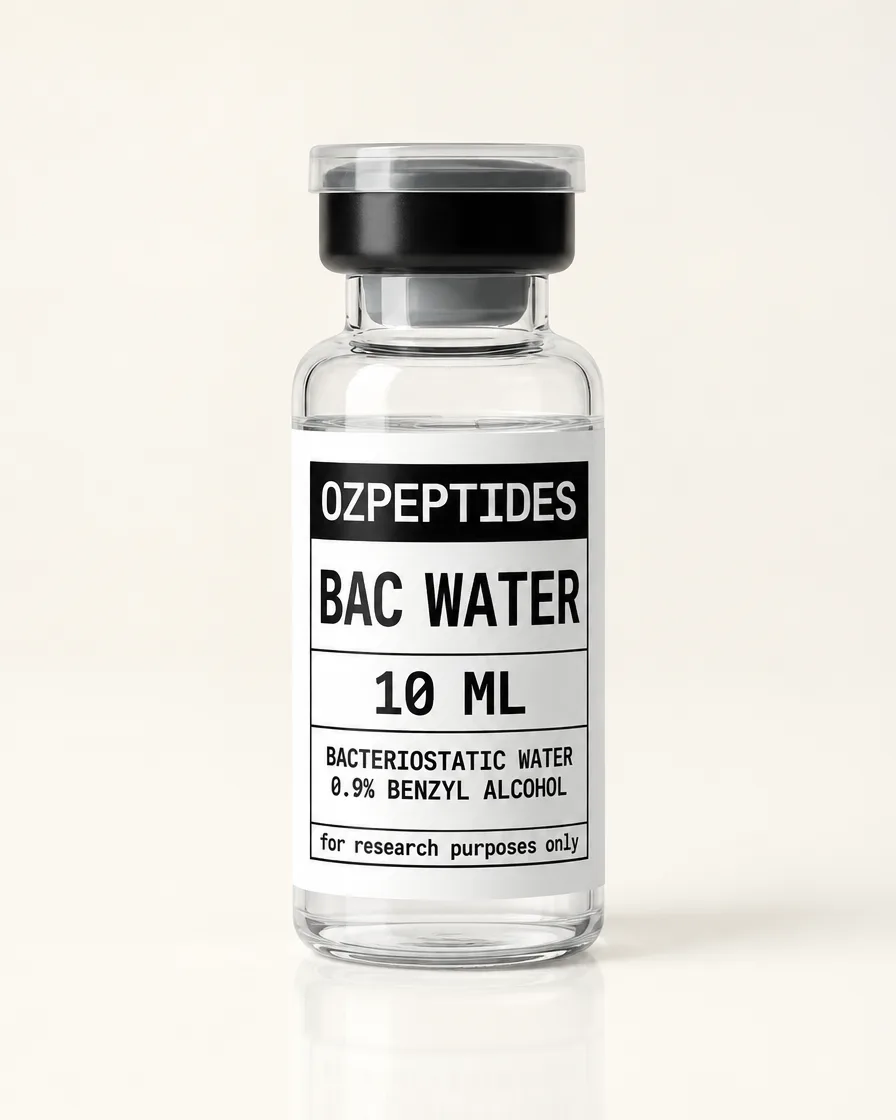
Accessories are listed alongside the peptides: bacteriostatic water, which is only needed for plain lyophilised vials, and the metal pens, which take pre-filled cartridges and are the one product here we do not make.
Three formats, one batch
Every peptide is sold plain, mixed in vial, or as a pen cartridge. The plain lyophilised vial is cheapest and keeps longest, because a freeze-dried peptide stored cold and dry outlasts the same peptide in solution by a wide margin — it needs bacteriostatic water and a syringe.
Mixed in vial and pen cartridge both arrive reconstituted, at no extra cost (or $5 more per vial while a sale is running), and need no diluent. The choice is whether to handle the reconstitution step yourself, and it does not change the peptide: all three formats come from the same batch, tested the same way.
The reconstitution calculator carries the arithmetic per product rather than generically, including units on a 100-unit insulin syringe and how many draws a vial holds.
The evidence across the range is not uniform
A catalogue that presents every compound as promising teaches a reader nothing, and the range here spans registered medicines and compounds with almost no published record. Semaglutide has cardiovascular outcome data; tirzepatide, oxytocin and hCG are registered medicines in Australia; afamelanotide completed registration trials in several markets.
At the other end, retatrutide has no completed phase 3 trial anywhere, AOD-9604 failed its phase 2b primary endpoint, BPC-157 has hundreds of papers and no identified receptor, and DSIP is named for an effect that largely failed replication. Each research guide states where its compound actually stands, including when the answer is that very little is established.
Research use only
Everything on this site is supplied for in-vitro and laboratory research only, to buyers aged 18 and over, and is not for human consumption. A few of the molecules exist as registered prescription medicines in Australia under brand names; research-grade material of the same molecule is a laboratory reagent, not that product, and is not a substitute for it.
Several compounds are prohibited in sport. BPC-157 sits under WADA S0, TB-500 and the growth hormone secretagogues under S2, and hCG is listed sex-specifically. Anything with no human therapeutic approval anywhere falls under S0 whether or not it is named on the list. Each guide says what applies to its compound.
Frequently asked
Where are OzPeptides peptides made?
In our own lab in Blacktown, NSW. They are synthesised and tested here rather than imported in bulk and relabelled.
What testing does each batch get?
Identity confirmed by mass spectrometry, purity measured at ≥99% by HPLC, and heavy metals screened at 0 ppm. The batch number on the vial resolves to its certificate.
What is the difference between the three formats?
Plain vials are cheapest and keep longest but need bacteriostatic water. Mixed in vial and pen cartridge arrive reconstituted, at no extra cost (or $5 more per vial while a sale is running).
Can I buy these for personal use?
No. Everything is supplied for in-vitro and laboratory research only, to buyers aged 18 and over, and is not for human consumption.
All compounds
Every research peptide we make, synthesised and tested in our Australian lab.
Every compound OzPeptides makes, in one list. Forty-two peptides across seventy product codes, synthesised and batch-tested in our own lab in Blacktown, NSW, and supplied for in-vitro and laboratory research only. The categories above split the same catalogue by what each compound is studied for; this page is the whole range.
Made here, not imported and relabelled
Most research peptides sold in Australia are imported in bulk and relabelled locally. That means the testing that matters happened somewhere else, if it happened at all, and the certificate that arrives with the vial is one the buyer cannot trace back to the batch in their hand.
We synthesise and test in the same facility. Every batch is confirmed by mass spectrometry, measured at ≥99% purity by HPLC, and screened at 0 ppm heavy metals, and the batch number printed on each vial resolves to that batch's own certificate of analysis. Certificates are sent on request.
The practical consequences are a shorter chain between synthesis and vial, no customs risk in the middle of it, and same-day dispatch from Sydney on orders placed before the daily cut-off. That is the argument for buying locally made rather than a patriotic one.
How to read a listing
Each compound is listed by name with the strengths we make it in, and every strength has its own page because every strength has its own arithmetic: what is in the vial, what it costs per milligram, what a reconstitution yields, and how many draws it holds. Price per milligram is rarely linear across vial sizes, since synthesis, testing and fill costs are largely fixed per batch, so larger vials are usually better value.
Blends are labelled by their components rather than by a single total, because with a combination the per-compound figure is the one that means something. Comparing a blend to a single peptide on price per milligram is misleading in both directions — the milligrams are not of the same thing.
Accessories are listed alongside the peptides: bacteriostatic water, which is only needed for plain lyophilised vials, and the metal pens, which take pre-filled cartridges and are the one product here we do not make.
Three formats, one batch
Every peptide is sold plain, mixed in vial, or as a pen cartridge. The plain lyophilised vial is cheapest and keeps longest, because a freeze-dried peptide stored cold and dry outlasts the same peptide in solution by a wide margin — it needs bacteriostatic water and a syringe.
Mixed in vial and pen cartridge both arrive reconstituted, at no extra cost (or $5 more per vial while a sale is running), and need no diluent. The choice is whether to handle the reconstitution step yourself, and it does not change the peptide: all three formats come from the same batch, tested the same way.
The reconstitution calculator carries the arithmetic per product rather than generically, including units on a 100-unit insulin syringe and how many draws a vial holds.
The evidence across the range is not uniform
A catalogue that presents every compound as promising teaches a reader nothing, and the range here spans registered medicines and compounds with almost no published record. Semaglutide has cardiovascular outcome data; tirzepatide, oxytocin and hCG are registered medicines in Australia; afamelanotide completed registration trials in several markets.
At the other end, retatrutide has no completed phase 3 trial anywhere, AOD-9604 failed its phase 2b primary endpoint, BPC-157 has hundreds of papers and no identified receptor, and DSIP is named for an effect that largely failed replication. Each research guide states where its compound actually stands, including when the answer is that very little is established.
Research use only
Everything on this site is supplied for in-vitro and laboratory research only, to buyers aged 18 and over, and is not for human consumption. A few of the molecules exist as registered prescription medicines in Australia under brand names; research-grade material of the same molecule is a laboratory reagent, not that product, and is not a substitute for it.
Several compounds are prohibited in sport. BPC-157 sits under WADA S0, TB-500 and the growth hormone secretagogues under S2, and hCG is listed sex-specifically. Anything with no human therapeutic approval anywhere falls under S0 whether or not it is named on the list. Each guide says what applies to its compound.
Frequently asked
Where are OzPeptides peptides made?
In our own lab in Blacktown, NSW. They are synthesised and tested here rather than imported in bulk and relabelled.
What testing does each batch get?
Identity confirmed by mass spectrometry, purity measured at ≥99% by HPLC, and heavy metals screened at 0 ppm. The batch number on the vial resolves to its certificate.
What is the difference between the three formats?
Plain vials are cheapest and keep longest but need bacteriostatic water. Mixed in vial and pen cartridge arrive reconstituted, at no extra cost (or $5 more per vial while a sale is running).
Can I buy these for personal use?
No. Everything is supplied for in-vitro and laboratory research only, to buyers aged 18 and over, and is not for human consumption.