Metabolic, made in Australia.
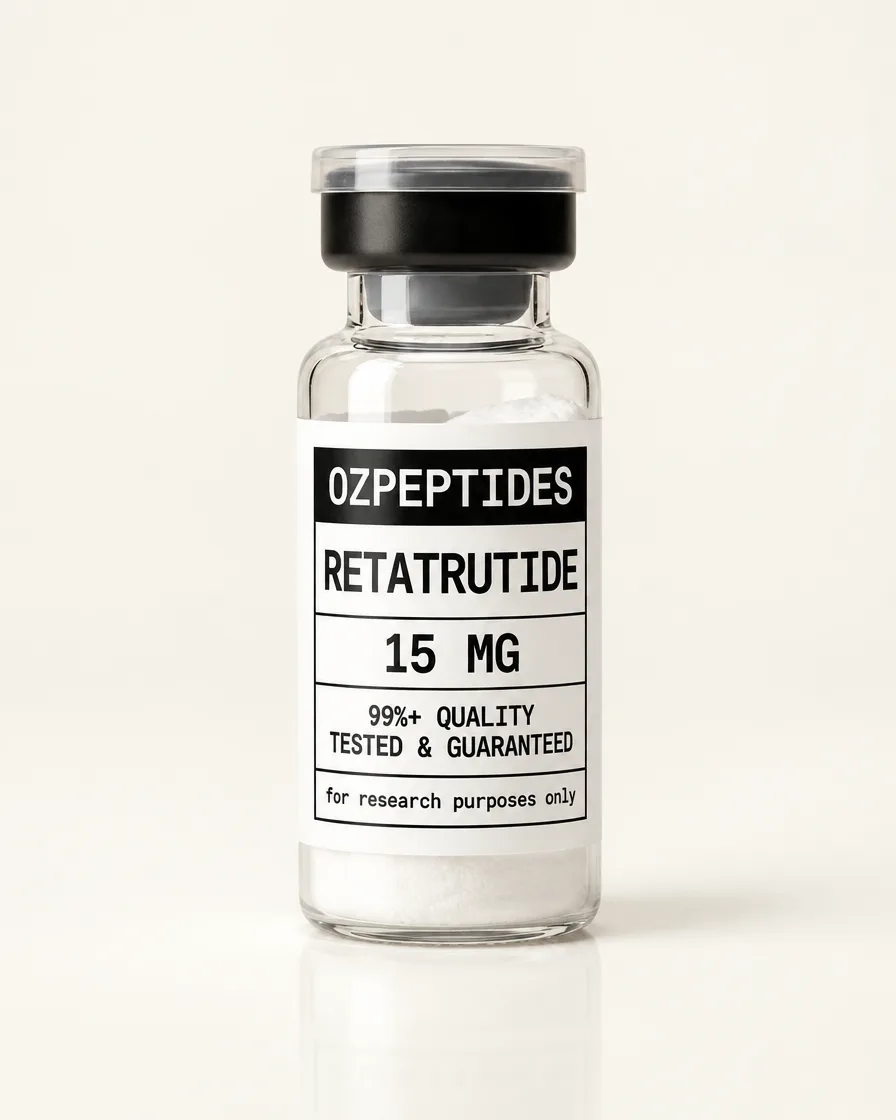
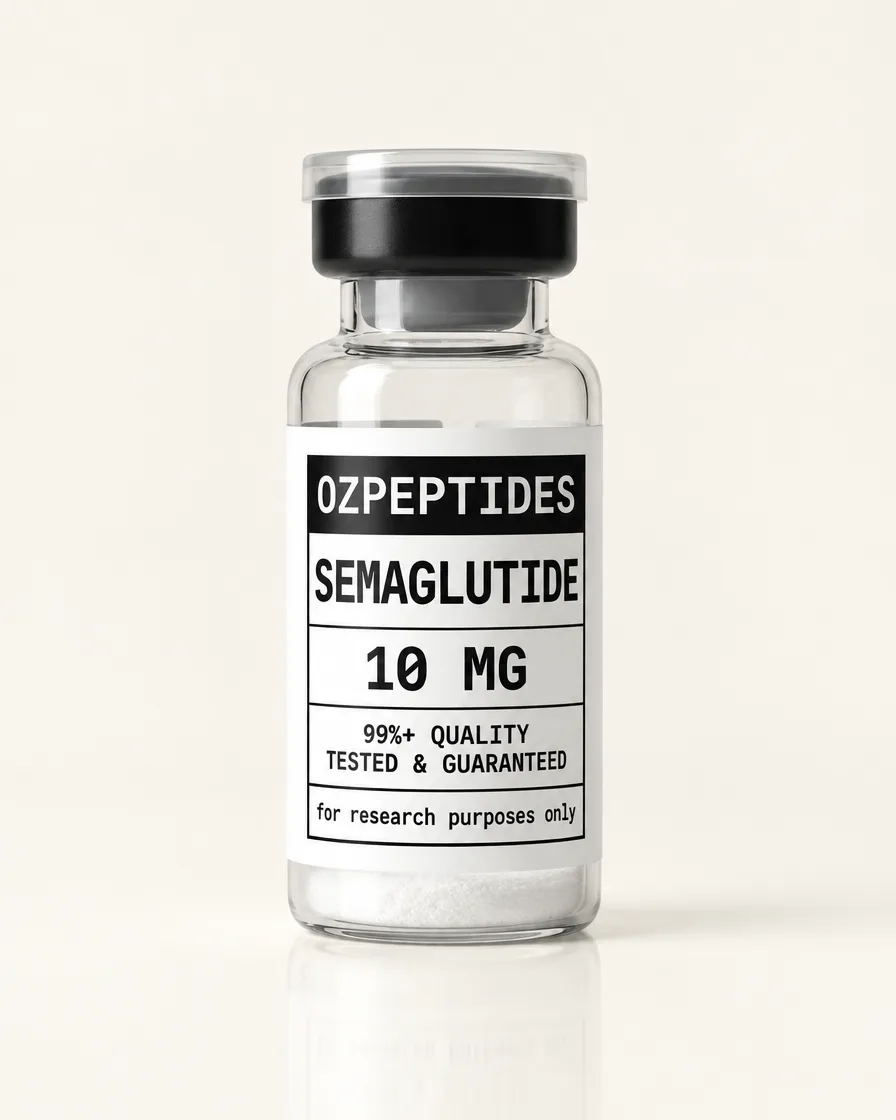
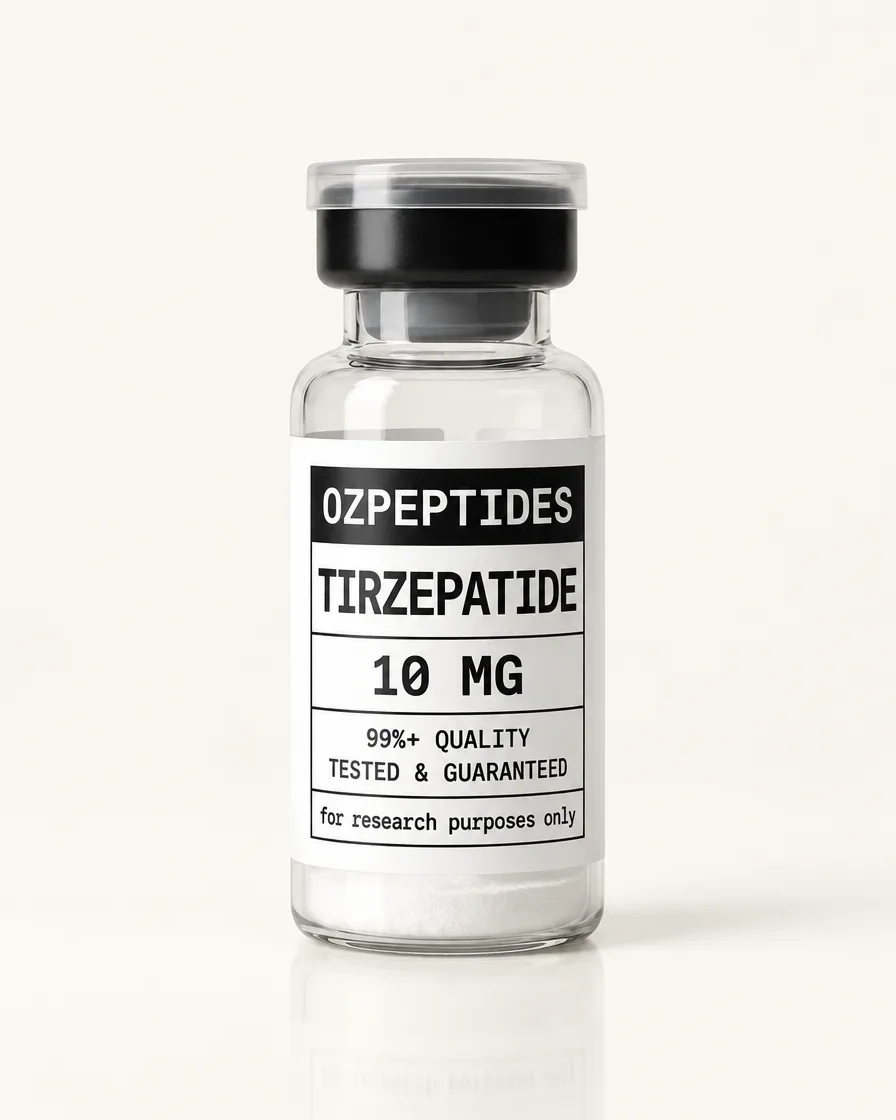
Metabolic research compounds including GLP-1 receptor agonists (semaglutide), dual GIP/GLP-1 agonists (tirzepatide) and the triple agonist retatrutide. Each batch is tested for purity and identity and screened for heavy metals before it leaves our lab.
Six compounds that act on the hormone signalling behind appetite, glucose handling and energy expenditure. Three of them are incretin receptor agonists differing in how many receptors they engage; the other three work through entirely separate mechanisms. Two are registered prescription medicines in Australia under brand names, which is a different thing from being an approved research chemical, and the guides say which is which.
What links these compounds
Most of this category is built on the incretin system — gut hormones released after eating that act on insulin release and satiety signalling. Semaglutide targets the GLP-1 receptor alone, tirzepatide adds GIP, and retatrutide adds glucagon on top of both. That order is also the order of how much is known about them: semaglutide has the deepest evidence base of any compound on this site, retatrutide the thinnest.
Adding a receptor is not turning up a dial. Each additional receptor recruits a different signalling pathway with its own effects and its own unknowns, which is why the three are three different mechanisms rather than three strengths of one idea.
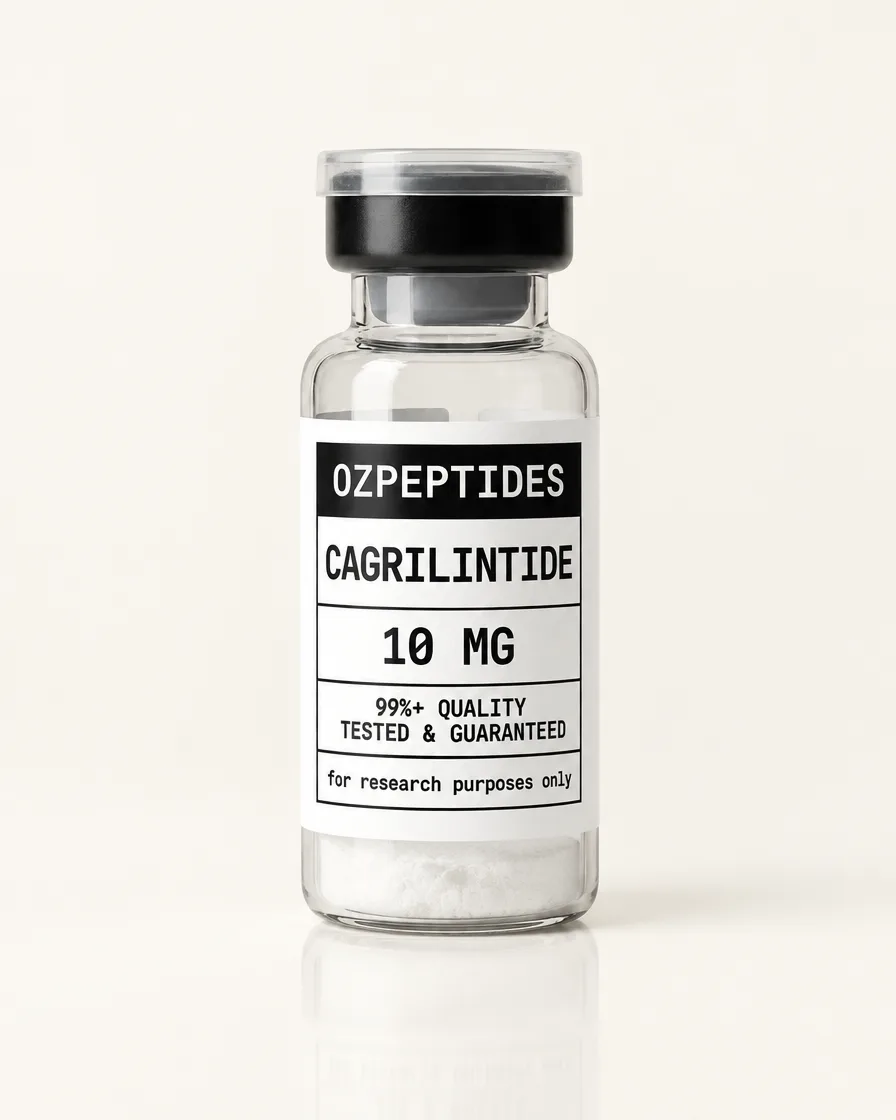
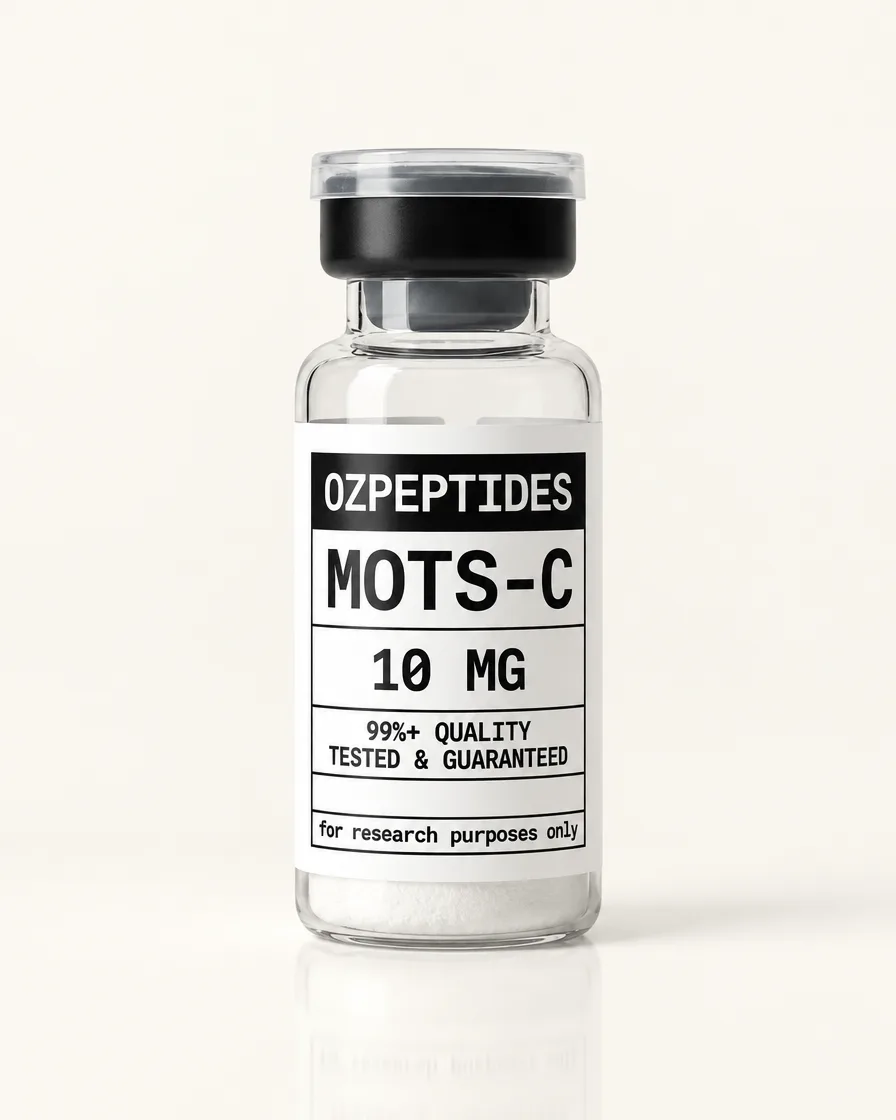
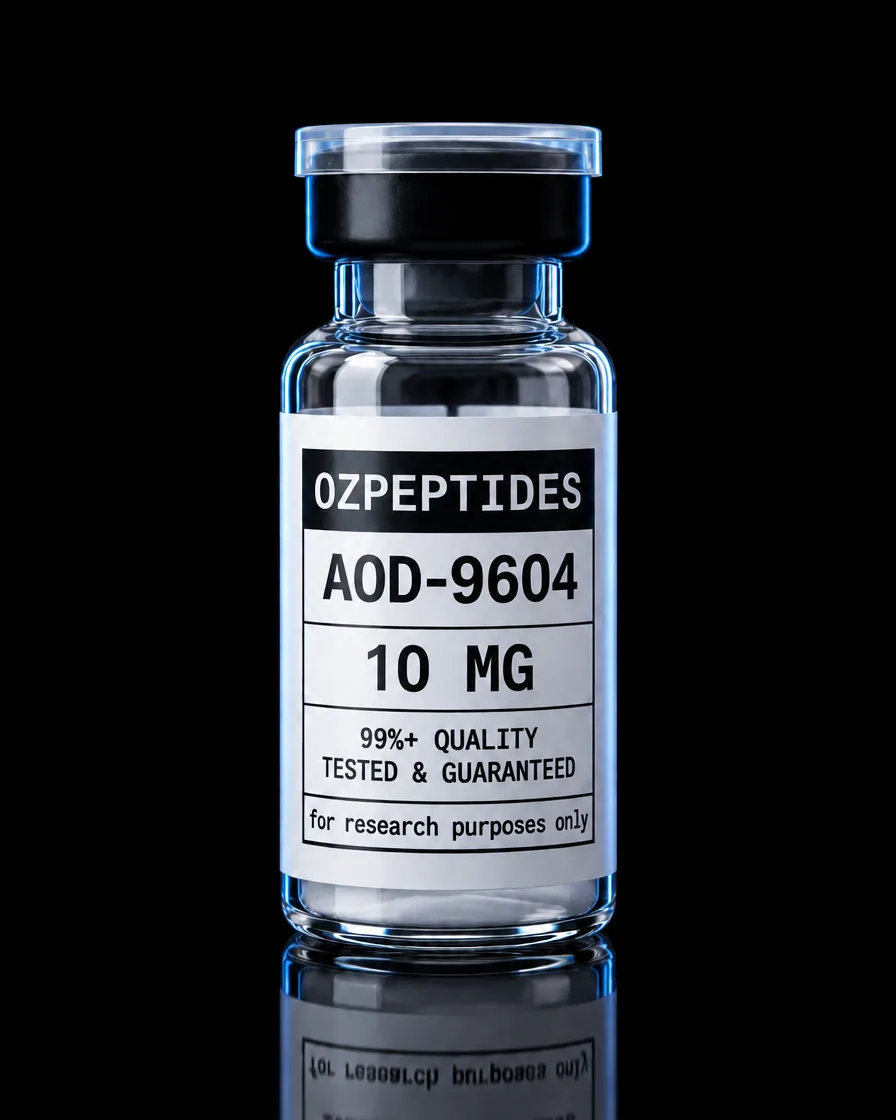
The other three sit outside that system entirely. Cagrilintide is an amylin analogue acting on a separate satiety pathway. MOTS-c is a mitochondrial-derived peptide associated with AMPK signalling. AOD-9604 is a growth hormone fragment developed at Monash University in Melbourne.
Where the evidence is, and where it is not
Semaglutide and tirzepatide have completed registrational programmes and are registered medicines in Australia, as Ozempic, Wegovy and Mounjaro. Semaglutide additionally has cardiovascular outcome data from the SELECT trial reported in 2023, which measured events rather than surrogate markers — the strongest form of evidence any compound here has.
Retatrutide has two phase 2 trials published in 2023 and no completed phase 3 anywhere. Cagrilintide is studied mainly as half of the CagriSema combination, so its single-agent record is thinner than its name recognition suggests. MOTS-c is preclinical. AOD-9604 reached phase 2b in obesity and did not separate from placebo on its primary endpoint, which is a real result rather than an absence of evidence.
Presenting these six as equivalently established would be straightforwardly false, and each guide states where its compound actually stands.
Choosing between them
For isolating a single mechanism, the single-receptor compound is the better instrument. Semaglutide is the cleanest tool for GLP-1 effects specifically, because an effect seen with a multi-receptor agonist cannot be attributed to any one receptor.
For questions about receptor interaction, the multi-agonists are the point. Tirzepatide is GIP-biased rather than balanced — its affinity is considerably higher for GIP — so effects observed with it are weighted accordingly, which is worth knowing before reading a result as a GLP-1 finding.
For anything outside incretin signalling, the other three are not substitutes for each other: amylin, mitochondrial and growth hormone fragment biology have essentially nothing in common.
Strengths, formats and price per milligram
Most compounds here come in several vial strengths, and the price per milligram is rarely linear across them — synthesis, batch testing and fill costs are largely fixed per batch rather than per milligram, so larger vials are usually better value. Every strength has its own page carrying its own arithmetic rather than leaving it to the reader.
Each vial is available plain, mixed in vial, or as a pen cartridge, and mixing costs nothing extra (or $5 more per vial while a sale is running). The plain lyophilised vial keeps longest; pre-mixed removes the reconstitution step. Bacteriostatic water is sold separately and is only needed for the plain vial.
Regulatory status and sport
Semaglutide and tirzepatide are registered prescription medicines in Australia. Research-grade material of the same molecule is a laboratory reagent, not that product, and is not a substitute for it. Retatrutide, cagrilintide, MOTS-c and AOD-9604 are not approved anywhere and are not registered in Australia.
For athletes, the compounds with no human therapeutic approval fall under the WADA S0 catch-all, prohibited at all times. AOD-9604 has a particular history in Australian anti-doping proceedings. The approved medicines are not currently named on the Prohibited List, but that list is revised annually and should be checked directly.
What to check before buying
This is the most heavily counterfeited category of peptides sold online, because demand for these compounds comes overwhelmingly from outside research. The two common failures are underfilling — a vial containing a fraction of its stated weight, which passes a purity test without difficulty — and substitution of a cheaper incretin under a more expensive name.
Neither is caught by a purity figure, which measures the fraction of what is present that is a single species rather than which species or how much. Mass spectrometry confirms identity and the certificate carries the fill weight. Every OzPeptides batch is made and tested in Blacktown, NSW, at ≥99% HPLC purity with 0 ppm heavy metals, with the batch number on the vial resolving to its certificate.
Frequently asked
Which metabolic peptide has the most evidence?
Semaglutide, by a wide margin. It has the SUSTAIN and STEP programmes plus cardiovascular outcome data from SELECT, which no other compound here has.
Is retatrutide stronger than tirzepatide?
Published phase 2 data reports larger effects, but comparing across separate trials is not a head-to-head result, and retatrutide has no phase 3 data at all.
Are any of these approved in Australia?
Semaglutide and tirzepatide are registered prescription medicines here. The rest are not approved anywhere and are not registered in Australia.
Why is per-milligram price not proportional to vial size?
Because synthesis setup, batch testing and fill costs are largely fixed per batch, so larger vials spread them further.
Metabolic
GLP-1, dual and triple agonists for metabolic and appetite research.
Six compounds that act on the hormone signalling behind appetite, glucose handling and energy expenditure. Three of them are incretin receptor agonists differing in how many receptors they engage; the other three work through entirely separate mechanisms. Two are registered prescription medicines in Australia under brand names, which is a different thing from being an approved research chemical, and the guides say which is which.
What links these compounds
Most of this category is built on the incretin system — gut hormones released after eating that act on insulin release and satiety signalling. Semaglutide targets the GLP-1 receptor alone, tirzepatide adds GIP, and retatrutide adds glucagon on top of both. That order is also the order of how much is known about them: semaglutide has the deepest evidence base of any compound on this site, retatrutide the thinnest.
Adding a receptor is not turning up a dial. Each additional receptor recruits a different signalling pathway with its own effects and its own unknowns, which is why the three are three different mechanisms rather than three strengths of one idea.
The other three sit outside that system entirely. Cagrilintide is an amylin analogue acting on a separate satiety pathway. MOTS-c is a mitochondrial-derived peptide associated with AMPK signalling. AOD-9604 is a growth hormone fragment developed at Monash University in Melbourne.
Where the evidence is, and where it is not
Semaglutide and tirzepatide have completed registrational programmes and are registered medicines in Australia, as Ozempic, Wegovy and Mounjaro. Semaglutide additionally has cardiovascular outcome data from the SELECT trial reported in 2023, which measured events rather than surrogate markers — the strongest form of evidence any compound here has.
Retatrutide has two phase 2 trials published in 2023 and no completed phase 3 anywhere. Cagrilintide is studied mainly as half of the CagriSema combination, so its single-agent record is thinner than its name recognition suggests. MOTS-c is preclinical. AOD-9604 reached phase 2b in obesity and did not separate from placebo on its primary endpoint, which is a real result rather than an absence of evidence.
Presenting these six as equivalently established would be straightforwardly false, and each guide states where its compound actually stands.
Choosing between them
For isolating a single mechanism, the single-receptor compound is the better instrument. Semaglutide is the cleanest tool for GLP-1 effects specifically, because an effect seen with a multi-receptor agonist cannot be attributed to any one receptor.
For questions about receptor interaction, the multi-agonists are the point. Tirzepatide is GIP-biased rather than balanced — its affinity is considerably higher for GIP — so effects observed with it are weighted accordingly, which is worth knowing before reading a result as a GLP-1 finding.
For anything outside incretin signalling, the other three are not substitutes for each other: amylin, mitochondrial and growth hormone fragment biology have essentially nothing in common.
Strengths, formats and price per milligram
Most compounds here come in several vial strengths, and the price per milligram is rarely linear across them — synthesis, batch testing and fill costs are largely fixed per batch rather than per milligram, so larger vials are usually better value. Every strength has its own page carrying its own arithmetic rather than leaving it to the reader.
Each vial is available plain, mixed in vial, or as a pen cartridge, and mixing costs nothing extra (or $5 more per vial while a sale is running). The plain lyophilised vial keeps longest; pre-mixed removes the reconstitution step. Bacteriostatic water is sold separately and is only needed for the plain vial.
Regulatory status and sport
Semaglutide and tirzepatide are registered prescription medicines in Australia. Research-grade material of the same molecule is a laboratory reagent, not that product, and is not a substitute for it. Retatrutide, cagrilintide, MOTS-c and AOD-9604 are not approved anywhere and are not registered in Australia.
For athletes, the compounds with no human therapeutic approval fall under the WADA S0 catch-all, prohibited at all times. AOD-9604 has a particular history in Australian anti-doping proceedings. The approved medicines are not currently named on the Prohibited List, but that list is revised annually and should be checked directly.
What to check before buying
This is the most heavily counterfeited category of peptides sold online, because demand for these compounds comes overwhelmingly from outside research. The two common failures are underfilling — a vial containing a fraction of its stated weight, which passes a purity test without difficulty — and substitution of a cheaper incretin under a more expensive name.
Neither is caught by a purity figure, which measures the fraction of what is present that is a single species rather than which species or how much. Mass spectrometry confirms identity and the certificate carries the fill weight. Every OzPeptides batch is made and tested in Blacktown, NSW, at ≥99% HPLC purity with 0 ppm heavy metals, with the batch number on the vial resolving to its certificate.
Frequently asked
Which metabolic peptide has the most evidence?
Semaglutide, by a wide margin. It has the SUSTAIN and STEP programmes plus cardiovascular outcome data from SELECT, which no other compound here has.
Is retatrutide stronger than tirzepatide?
Published phase 2 data reports larger effects, but comparing across separate trials is not a head-to-head result, and retatrutide has no phase 3 data at all.
Are any of these approved in Australia?
Semaglutide and tirzepatide are registered prescription medicines here. The rest are not approved anywhere and are not registered in Australia.
Why is per-milligram price not proportional to vial size?
Because synthesis setup, batch testing and fill costs are largely fixed per batch, so larger vials spread them further.