Longevity, made in Australia.
Longevity research compounds including NAD+ and glutathione, made and tested in Australia.
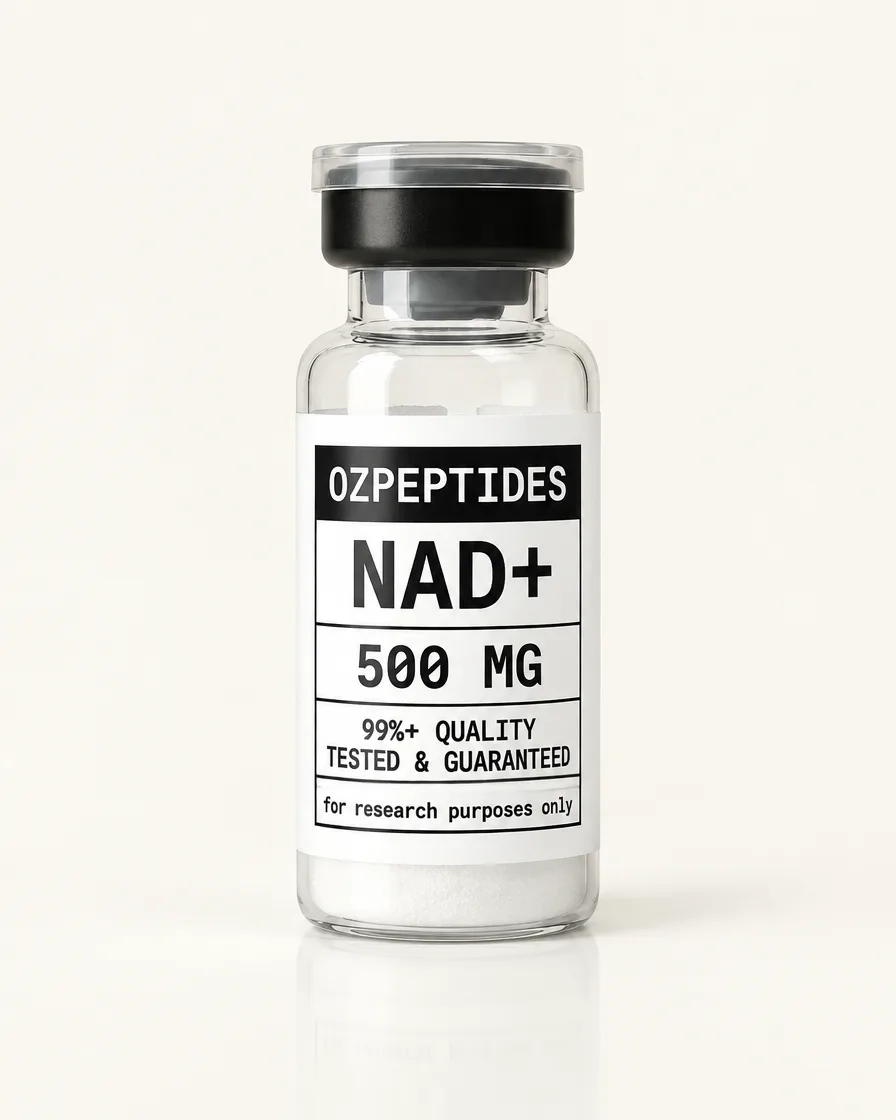
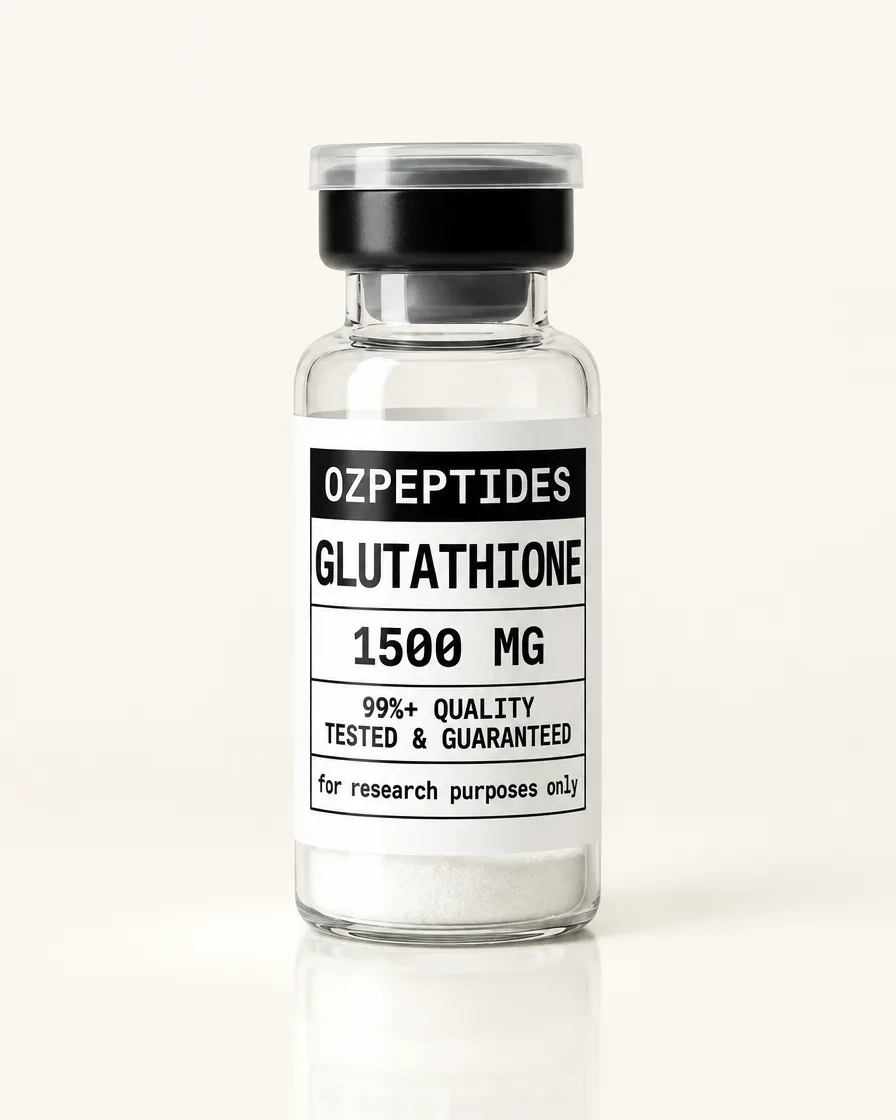
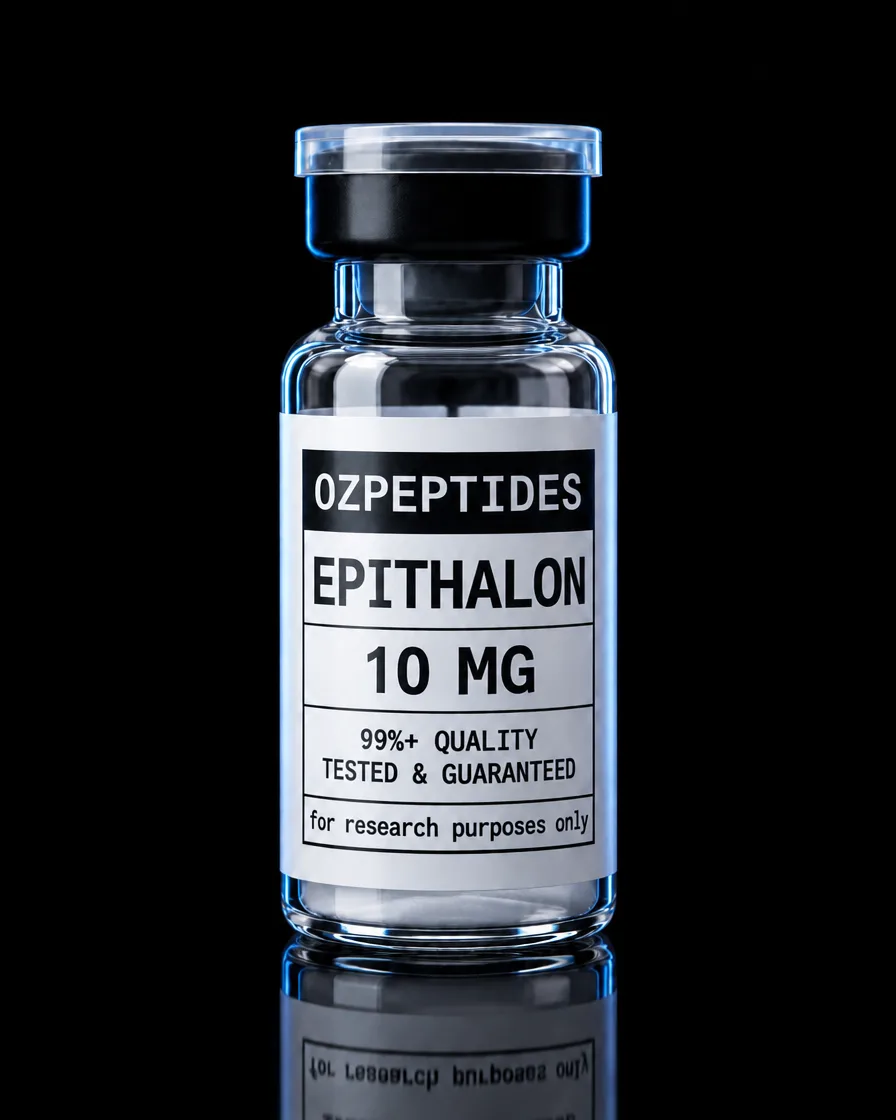
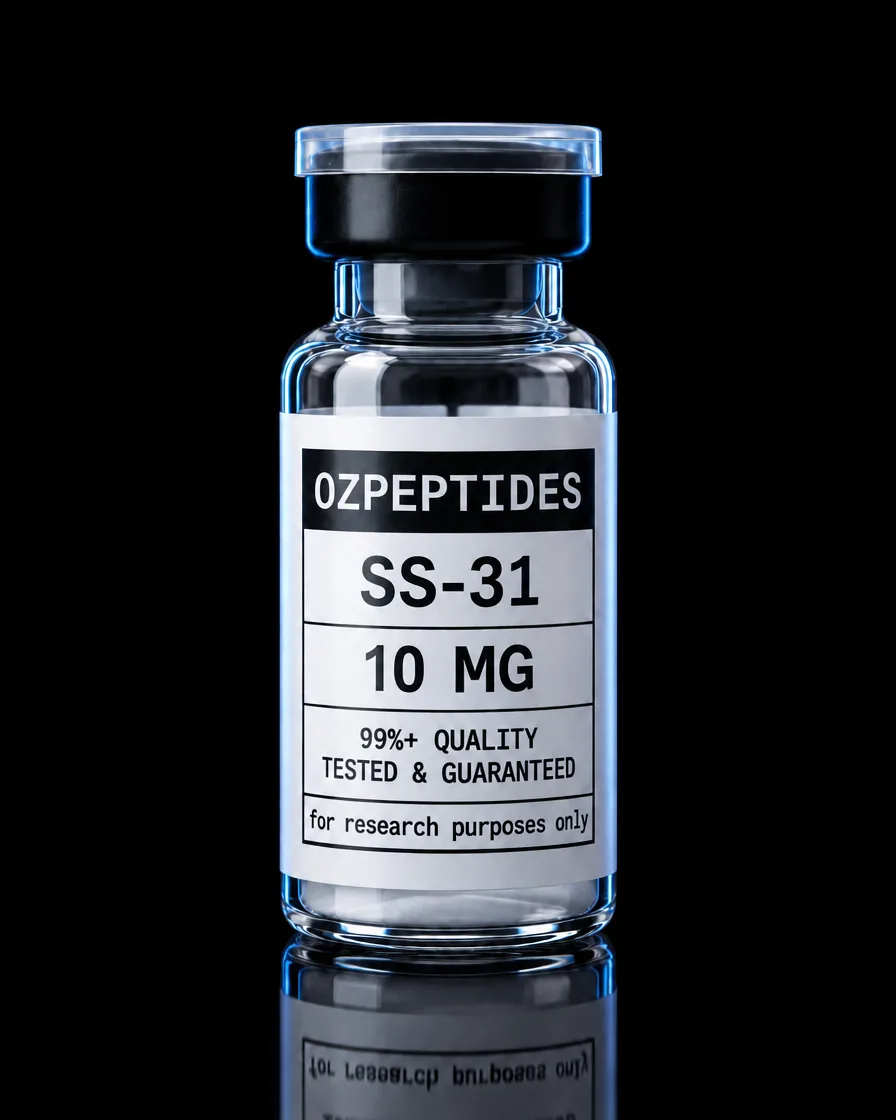
Four compounds studied in ageing biology, and they have less in common than the category name suggests. Two are not peptides at all — NAD+ is a coenzyme and glutathione a tripeptide antioxidant, both fundamental cell biology. Epithalon comes from the Russian bioregulator tradition. SS-31 has a defined molecular target and a real clinical trial programme with mixed results.
What links these compounds
The common thread is mitochondrial and cellular maintenance rather than a shared mechanism. NAD+ is required for the redox reactions that produce cellular energy and as a substrate for sirtuins and PARPs. Glutathione is the most abundant antioxidant made inside human cells and a cofactor for the enzymes that handle peroxides. SS-31 targets cardiolipin, the phospholipid that organises the respiratory chain in the inner mitochondrial membrane.
Epithalon sits apart from all three: a synthetic tetrapeptide based on a pineal extract, with claims centred on telomerase rather than on energy metabolism.
Two of the four — NAD+ and glutathione — are things the body already makes in quantity, which changes the research question. It is not whether they do something, which is established beyond argument, but whether supplying more of them to a system that already has them produces any benefit.
Where the evidence is, and where it is not
SS-31 has the strongest record here by a wide margin: randomised controlled trials as elamipretide in Barth syndrome, primary mitochondrial myopathy, dry age-related macular degeneration and heart failure. The results are mixed — a phase 3 trial in primary mitochondrial myopathy did not meet its primary endpoint — and that is a real result rather than an absence of evidence.
NAD+ biology is excellent and its outcome data is thin. That tissue NAD+ falls with age is well replicated; that raising it produces functional benefits in humans is not established, and human trials of precursors have mostly shown only that blood levels rise.
Glutathione depletion is unambiguously harmful — paracetamol hepatotoxicity is the textbook case — while supplementing above normal levels in a healthy system is a separate claim with much weaker support.
Epithalon's telomerase claims trace largely to the group that developed the compound, published in venues with limited international indexing, and have not been reproduced at scale by unaffiliated laboratories.
Stability: the practical constraint in this category
This is the one category where solution stability is a real limitation rather than boilerplate caution. NAD+ hydrolyses in aqueous solution at a rate that rises with pH and temperature, so a reconstituted vial has a shorter useful window than a typical peptide.
Glutathione oxidises on exposure to air and light, and the oxidised dimer is not the active form — which means a certificate reporting purity without distinguishing GSH from GSSG is leaving out what matters. A fully oxidised batch can be chemically pure and functionally useless.
Epithalon and SS-31 are short peptides and behave normally: stable dry and cold, weeks in solution under refrigeration.
Mechanism, from best understood to least
SS-31 is the clearest: an aromatic-cationic peptide designed to accumulate in the inner mitochondrial membrane independently of membrane potential — which matters, because a depolarised damaged mitochondrion is exactly the one you would want to reach — where it binds cardiolipin.
NAD+ and glutathione have textbook biochemistry with an open translational question. The interesting unresolved point for NAD+ is why it declines: increased consumption by PARPs and CD38, or reduced salvage synthesis? Precursor supplementation only addresses the second.
Epithalon's proposed mechanism — a short peptide entering the nucleus and influencing transcription in a tissue-specific way — is an unusual claim that molecular biology outside its originating tradition has not adopted.
Regulatory status and sport
Nothing in this category is registered in Australia. Elamipretide has orphan and fast-track designations, which are not approvals. Epithalon's standing in Russia carries no weight in Australia.
For athletes: NAD+ is an endogenous coenzyme and is not on the Prohibited List, and glutathione is not listed as a substance — but WADA M2 prohibits intravenous infusions above a stated volume regardless of what is being infused, which catches people out. Epithalon and SS-31 fall under the S0 catch-all as substances with no human therapeutic approval.
What to check before buying
The usual checks apply — identity by mass spectrometry, purity by HPLC, fill weight, heavy metals — with two category-specific additions. For NAD+, degradation products: it breaks down to nicotinamide and ADP-ribose, and a poorly stored batch will show them. For glutathione, the reduced-to-oxidised ratio, since the oxidised form is not active.
SS-31 carries an identity question because the SS family contains several closely related peptides that share a design motif and differ in sequence. Mass spectrometry distinguishes them; a purity figure cannot. We make all four in Blacktown, NSW, at ≥99% HPLC purity with 0 ppm heavy metals.
Frequently asked
Are NAD+ and glutathione peptides?
Glutathione is a tripeptide. NAD+ is a coenzyme, not a peptide, and sits apart from the rest of this catalogue.
Which compound here has clinical trial data?
SS-31, as elamipretide, in Barth syndrome, mitochondrial myopathy, macular degeneration and heart failure. Results have been mixed.
Has epithalon's telomerase claim been replicated?
Not by unaffiliated laboratories at scale. It traces largely to the originating group, in venues with limited international indexing.
Why do these need more careful storage?
NAD+ hydrolyses in water and glutathione oxidises on air exposure, so both have shorter solution windows than a typical peptide.
Longevity
NAD+, glutathione and more for longevity research.
Four compounds studied in ageing biology, and they have less in common than the category name suggests. Two are not peptides at all — NAD+ is a coenzyme and glutathione a tripeptide antioxidant, both fundamental cell biology. Epithalon comes from the Russian bioregulator tradition. SS-31 has a defined molecular target and a real clinical trial programme with mixed results.
What links these compounds
The common thread is mitochondrial and cellular maintenance rather than a shared mechanism. NAD+ is required for the redox reactions that produce cellular energy and as a substrate for sirtuins and PARPs. Glutathione is the most abundant antioxidant made inside human cells and a cofactor for the enzymes that handle peroxides. SS-31 targets cardiolipin, the phospholipid that organises the respiratory chain in the inner mitochondrial membrane.
Epithalon sits apart from all three: a synthetic tetrapeptide based on a pineal extract, with claims centred on telomerase rather than on energy metabolism.
Two of the four — NAD+ and glutathione — are things the body already makes in quantity, which changes the research question. It is not whether they do something, which is established beyond argument, but whether supplying more of them to a system that already has them produces any benefit.
Where the evidence is, and where it is not
SS-31 has the strongest record here by a wide margin: randomised controlled trials as elamipretide in Barth syndrome, primary mitochondrial myopathy, dry age-related macular degeneration and heart failure. The results are mixed — a phase 3 trial in primary mitochondrial myopathy did not meet its primary endpoint — and that is a real result rather than an absence of evidence.
NAD+ biology is excellent and its outcome data is thin. That tissue NAD+ falls with age is well replicated; that raising it produces functional benefits in humans is not established, and human trials of precursors have mostly shown only that blood levels rise.
Glutathione depletion is unambiguously harmful — paracetamol hepatotoxicity is the textbook case — while supplementing above normal levels in a healthy system is a separate claim with much weaker support.
Epithalon's telomerase claims trace largely to the group that developed the compound, published in venues with limited international indexing, and have not been reproduced at scale by unaffiliated laboratories.
Stability: the practical constraint in this category
This is the one category where solution stability is a real limitation rather than boilerplate caution. NAD+ hydrolyses in aqueous solution at a rate that rises with pH and temperature, so a reconstituted vial has a shorter useful window than a typical peptide.
Glutathione oxidises on exposure to air and light, and the oxidised dimer is not the active form — which means a certificate reporting purity without distinguishing GSH from GSSG is leaving out what matters. A fully oxidised batch can be chemically pure and functionally useless.
Epithalon and SS-31 are short peptides and behave normally: stable dry and cold, weeks in solution under refrigeration.
Mechanism, from best understood to least
SS-31 is the clearest: an aromatic-cationic peptide designed to accumulate in the inner mitochondrial membrane independently of membrane potential — which matters, because a depolarised damaged mitochondrion is exactly the one you would want to reach — where it binds cardiolipin.
NAD+ and glutathione have textbook biochemistry with an open translational question. The interesting unresolved point for NAD+ is why it declines: increased consumption by PARPs and CD38, or reduced salvage synthesis? Precursor supplementation only addresses the second.
Epithalon's proposed mechanism — a short peptide entering the nucleus and influencing transcription in a tissue-specific way — is an unusual claim that molecular biology outside its originating tradition has not adopted.
Regulatory status and sport
Nothing in this category is registered in Australia. Elamipretide has orphan and fast-track designations, which are not approvals. Epithalon's standing in Russia carries no weight in Australia.
For athletes: NAD+ is an endogenous coenzyme and is not on the Prohibited List, and glutathione is not listed as a substance — but WADA M2 prohibits intravenous infusions above a stated volume regardless of what is being infused, which catches people out. Epithalon and SS-31 fall under the S0 catch-all as substances with no human therapeutic approval.
What to check before buying
The usual checks apply — identity by mass spectrometry, purity by HPLC, fill weight, heavy metals — with two category-specific additions. For NAD+, degradation products: it breaks down to nicotinamide and ADP-ribose, and a poorly stored batch will show them. For glutathione, the reduced-to-oxidised ratio, since the oxidised form is not active.
SS-31 carries an identity question because the SS family contains several closely related peptides that share a design motif and differ in sequence. Mass spectrometry distinguishes them; a purity figure cannot. We make all four in Blacktown, NSW, at ≥99% HPLC purity with 0 ppm heavy metals.
Frequently asked
Are NAD+ and glutathione peptides?
Glutathione is a tripeptide. NAD+ is a coenzyme, not a peptide, and sits apart from the rest of this catalogue.
Which compound here has clinical trial data?
SS-31, as elamipretide, in Barth syndrome, mitochondrial myopathy, macular degeneration and heart failure. Results have been mixed.
Has epithalon's telomerase claim been replicated?
Not by unaffiliated laboratories at scale. It traces largely to the originating group, in venues with limited international indexing.
Why do these need more careful storage?
NAD+ hydrolyses in water and glutathione oxidises on air exposure, so both have shorter solution windows than a typical peptide.